

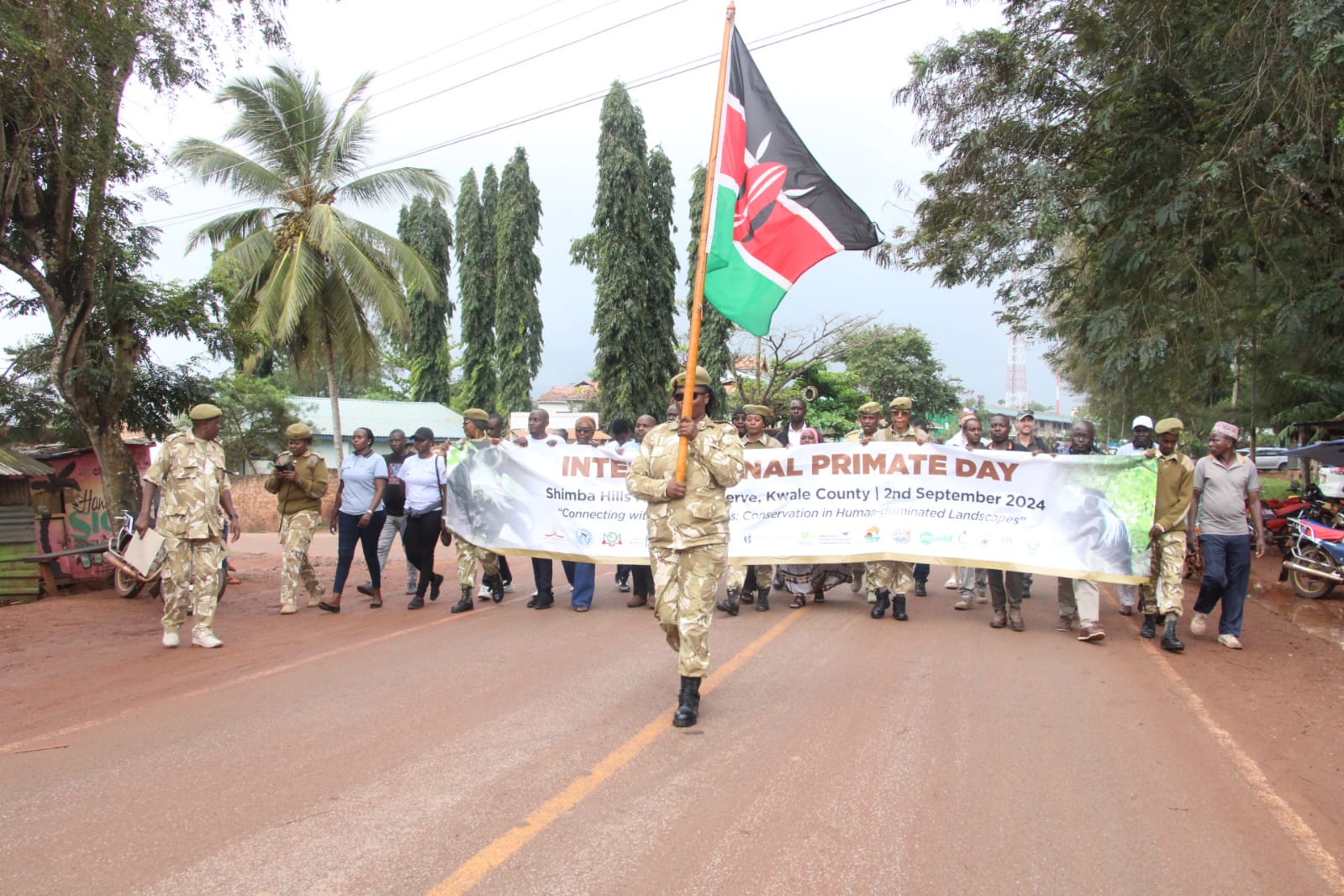

The Kenya Institute of Primate Research (KIPRE) is currently taking center stage in raising public awareness about the effects of consuming wild meat, especially primates, by introducing sports activities, traditional plays, and community engagement forums amid an Mpox alert in Kenya.
Speaking at Shimba Hills National Reserve in Kwale County, KIPRE Senior Scientist Dr. Stanislaus Kivai said that human activities and climate change have largely contributed to the high risk of primates becoming extinct worldwide.
“This is a very important day for us as conservationists, communities, and scientists to rethink how best we can save these primates from extinction. We are raising public awareness on why people should stop viewing primates as a source of food and instead protect them for future generations, as they play a key role in the ecosystem,” said Dr. Kivai.
Conservation scientists are using activities such as football, traditional dances, and songs to convey their message to the community.
The International Day of Primates, celebrated every September 1st, provides a platform for stakeholders to highlight major challenges and suggest possible solutions to save primates.
“I would like to mention that International Primate Day has been around for many years, but it was not celebrated in Kenya until 2022, when we involved the public in conserving the environment and restoring destroyed habitats. We have engaged youth as our foot soldiers through sports to support conservation,” added Dr. Kivai.
The stakeholders are aligning their efforts with this year’s theme, “Connecting with Wild Primates and Conservation in Human-Dominated Landscapes,” by advocating for the restoration of degraded areas, especially community lands.
Illegal poaching and the killing of primates for bushmeat have been identified as significant threats.
“We have seen an increase in the killing of primates by communities for meat, which poses a health risk to anyone consuming wild meat. With the Mpox alert in the country, we are urging communities to refrain from eating bushmeat to avoid strange diseases,” said Dr. Kavai.
In addition, Dr. Danson Mwangi, a Senior Scientist at KIPRE, noted that the institution is currently conducting research on the spread and prevention of tropical, reproductive, one health, and lifestyle diseases.
He emphasized ongoing research at the Snake Bites Research Center, which is exploring alternative vaccines made in Kenya for local use.
“Research has shown that vaccines or drugs produced in other countries like South Africa or China are specifically designed for snake bites in those regions. The establishment of the research center in Kenya will be crucial for producing anti-venom vaccines from Kenyan snakes, tailored to this region,” Dr. Mwangi said.
The Colobus Diani Foundation highlighted the involvement of schools in conserving primates from extinction.
Human activities such as urbanization and agriculture have been largely blamed for the decline in the number of colobus monkeys in Kwale County, which inhabit the Shimba Hills National Reserve.
“One of the challenges facing the Diani colobus is electrocution by power lines, especially uninsulated ones. As a mitigation measure, we have been asking KPLC to work on the open power lines,” said Nancy Mungania, an honorary warden at Colobus Diani Foundation.
Climate change has also contributed to primate extinction, especially during droughts when forests are cut down, leading to habitat destruction.
Stakeholders have encouraged communities living near conservancies, sanctuaries, and national parks to avoid activities that disrupt primate habitats.
“It is evident that illegal human activities, such as poaching and deforestation, result in inadequate rainfall and the drying up of rivers and water points. Therefore, as human beings, we should jointly speak for the voiceless wildlife to ensure their survival,” said Joyce Mbugua, an expert in climate change.
At the county level, the Department of Tourism and Wildlife is working with local hotels in Kwale County to promote conservation by sensitizing the public on the benefits of preserving wildlife.
According to Antony Mwamunga, the Chief Officer of Tourism in Kwale County, one of the endangered species found at Shimba Hills National Reserve is the sable antelope, which is targeted by poachers despite being a rare species worldwide.
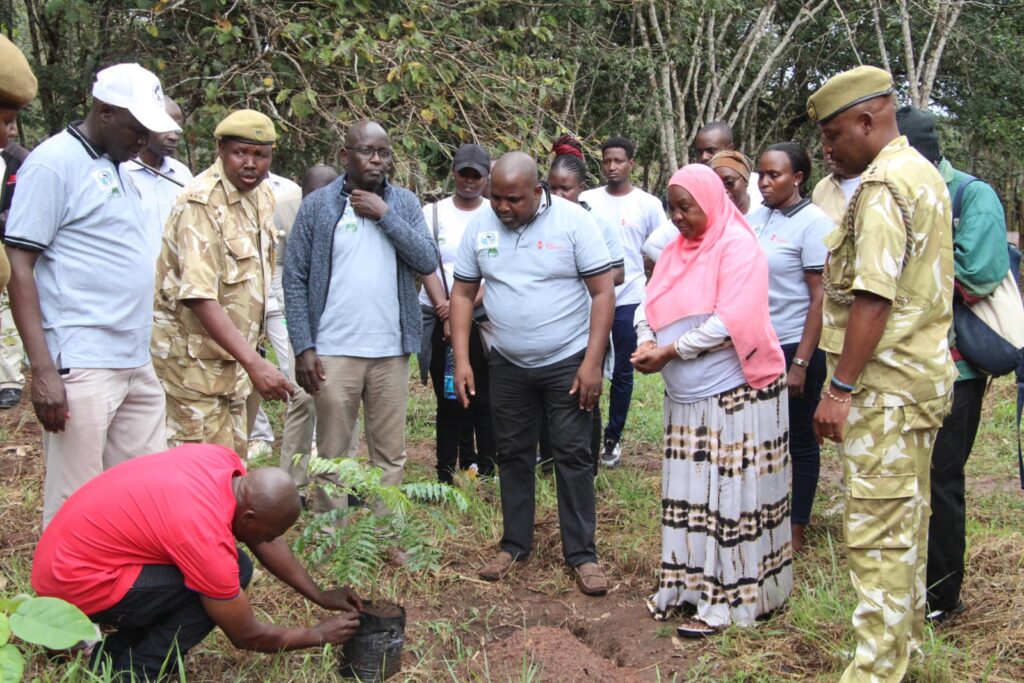
“We are working closely with KWS and other stakeholders to explore how we can relocate the sable antelopes from Shimba Hills National Reserve to other conservancies to protect them from poaching. I also want to warn our people in Kwale to avoid consuming game meat to prevent diseases like Mpox,” said Mwamunga.
As part of its mandate to protect wildlife, KWS Senior Warden at Shimba Hills National Reserve, Mr. Titus Mitau, applauded KIPRE for organizing the celebrations in Kwale and introducing sports activities to raise awareness about the need for multi-sectoral efforts in conservation.
“We call upon all stakeholders to unite in conservation efforts and complement each other’s work toward protecting primates. Let us also be conscious of nature for a better tomorrow,” Mitau urged.
During the International Primate Day sports competition, Black Dragon won the tournament.
