

Kwale County is set to conduct research on the causes of disability among its residents and how these can be prevented.
Even in what is often referred to as modern times, having a disabled child still brings mockery and stigmatization from the immediate community.
Mwanapili Kasindano, a resident of Mwereni, Kwale County, has faced stigmatization along with her 3-year-old daughter, who has Cerebral Palsy (CP).
Cerebral Palsy, a neurological disorder caused by brain damage, affects a child’s movement and posture, with varying degrees of severity.
Kwale County has about 18,000 disabled persons, 3,140 of whom have Cerebral Palsy.
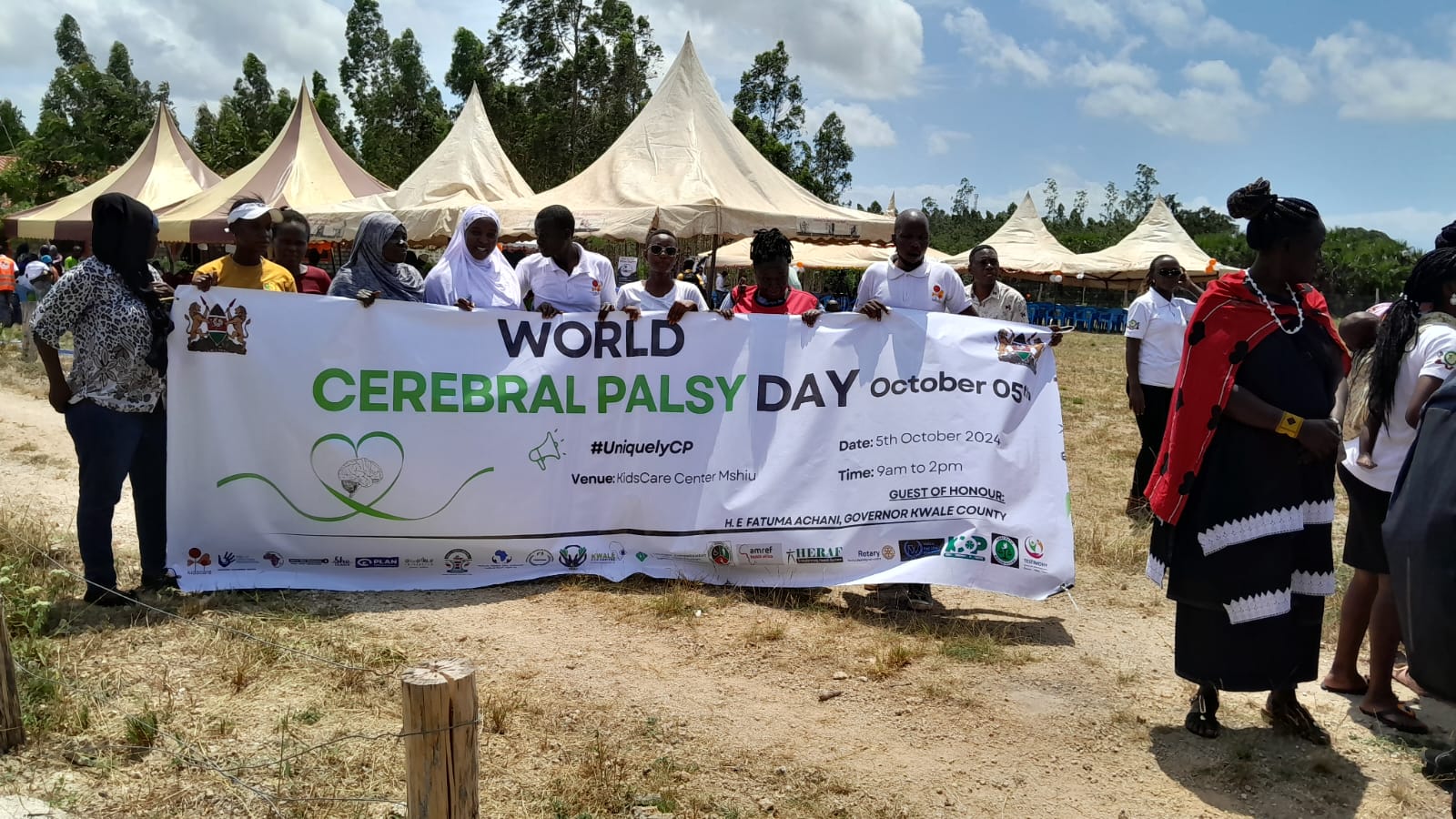
Speaking to Tsavo News Network during the marking of World Cerebral Palsy Day at Kids Care in Kwale County, Mwanapili explained that she initially had no knowledge about the condition until a neighbor noticed her baby’s posture and advised her to visit the hospital.
During the event, women were urged to attend regular clinic visits during and after pregnancy, even if they choose to give birth at home.
Kwale, which is largely populated by the Mijikenda community, is known for its strong cultural adherence.
However, this advice did not sit well with Mwanapili, as she had given birth in a hospital and had attended regular clinic checkups, yet no doctor ever mentioned any issues.
“I gave birth at Msambweni Hospital, but not once did the doctors raise concerns during my clinic visits,” she said.
It later came to her attention that her clinic book had the words “Cerebral Palsy” written in it, but no explanation had been given.
During one of her hospital visits, she raised the issue and was directed to Kids Care for further assistance.
With the motto “Every Child Matters,” Kids Care partners with the government and other organizations to offer support to Cerebral Palsy warriors and their caregivers.
“We advocate for community inclusivity, ensuring that those with CP are embraced and considered equally important,” said George Baya, Director at Kids Care.
In collaboration with the government, six schools close to dispensaries have been built to provide education and free therapy services for children with CP.
These schools serve 180 students in total, with each school accommodating at least 30 children, while over 200 children benefit from therapy services.
Mwanapili recalls spending over Kshs. 1,000 on fare to take her child to Kids Care, something that she found burdensome.
However, the establishment of special schools in every ward has been a great relief to her and her family.
As a self-employed ‘Mama Mboga’ (vegetable vendor) with a supportive husband, Mwanapili worries about other women who may not afford diapers and medicines needed for CP warriors.
Juliet Ruwa, Director of the National Council for Persons with Disabilities, announced that the committee is initiating a program to provide diapers, medicine, and therapy through home-to-home delivery.

Juliet revealed that many parents have not registered their children under the “disabled” category due to fear of stigma and rejection within the community.
She emphasized the importance of registration, which comes with benefits such as group development funding and the provision of diapers and pads.
Fatumo Masito, Women Representative for Kwale County, who issued pads during the event, emphasized the importance of the National Government Affirmative Action Fund (NGAAF), which is primarily allocated for women and youth and disbursed in groups to facilitate development.
Juliet noted that parents are increasingly embracing their uniquely abled children and bringing them out for such programs.
All parents of children with disabilities are encouraged to accept their children and introduce them to therapy.
Mwanapili has seen significant improvement in her child post-therapy, as she is now able to sit and is physically active.
