

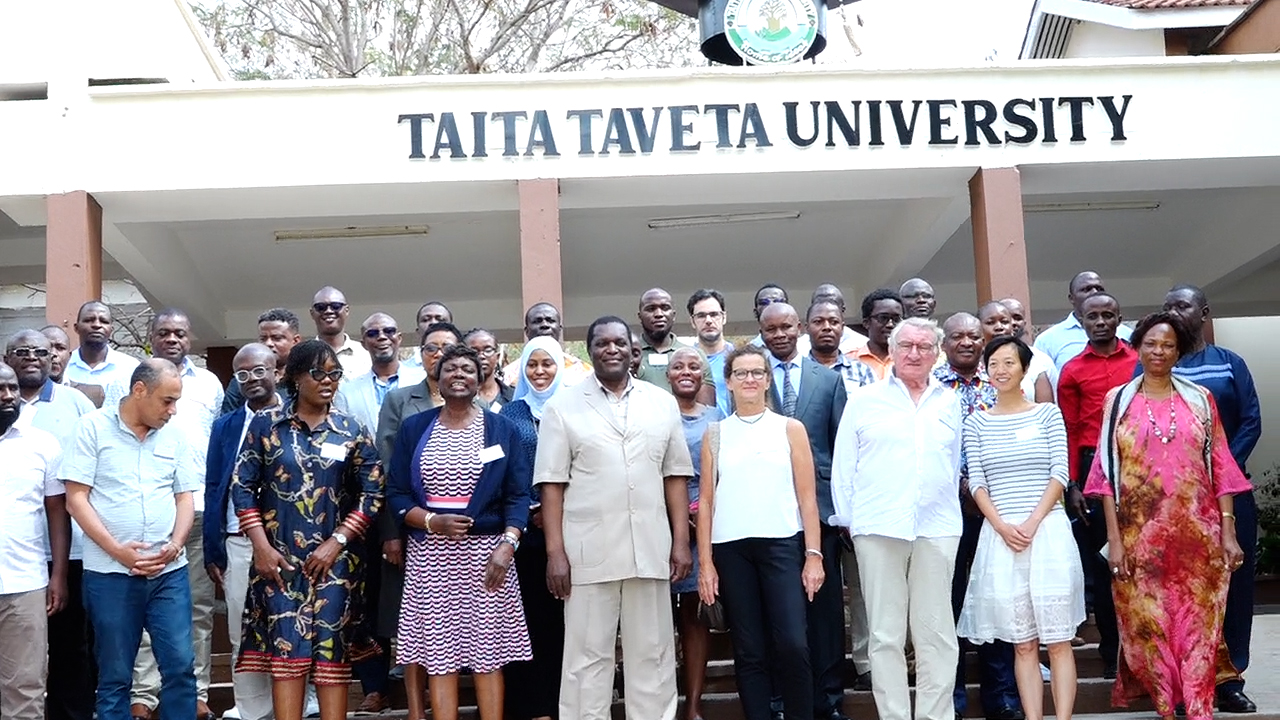

Taita Taveta University is hosting a week-long workshop organized by the German Academic Exchange Service (DAAD), gathering alumni and current students to discuss advancements in engineering education and workforce development.
This event highlights ongoing efforts to strengthen educational ties between Kenya and Germany, particularly in mining and engineering.
Addressing the press after officially launching the workshop on Monday, Prof. Simiyu Barasa, the Vice Chancellor of Taita Taveta University, emphasized the university’s key role in training mining engineers in Kenya.
He stated that the University’s partnership with German universities has enabled the institution to develop a comprehensive academic framework, including bachelor’s and master’s degrees, as well as Kenya’s first PhD program in mining engineering.
Barasa also noted the importance of continuous faculty development, with many professors receiving training in Germany.
“We don’t have enough expertise in the country. Through this program and through the assistance of the German Academic Exchange Service (DAAD), we are able to get professors from Germany to come here to teach on short notice, to teach online our programs, to supervise our senior students, and because of that, we now have a high complement of staff,” he noted.
The VC added that, “Every year we have a summer program. We take a number of students, up to 26 students every year to Germany, Kenyan students on a study program in Germany. And we also have students from Germany who come here for research, exchange and so on.”
Barasa also stated that the support from the German government through DAAD has had a significant impact on the institution’s educational infrastructure.
He noted that as a government, there is a lack of sufficient funds to adequately equip labs and workshops.
However, through such programs, the VC disclosed that the institution has made substantial improvements with the extensive infrastructure enhancements it has received and continues to benefit from.
“As a government, we do not have sufficient funds to equip our labs and workshops, but courtesy of the support we have received from the German government through DAAD and through this program, you can visit our workshops and you’ll see the enormous infrastructure that we have been able to receive and we continue receiving,” said Barasa.
Dr. Dorothee Weyler, the Regional Director of DAAD in Kenya, emphasized the significance of institutional collaboration stating that, “Our mission is to support universities in Africa, and this workshop showcases the ongoing relationship between Kenyan and German institutions.”
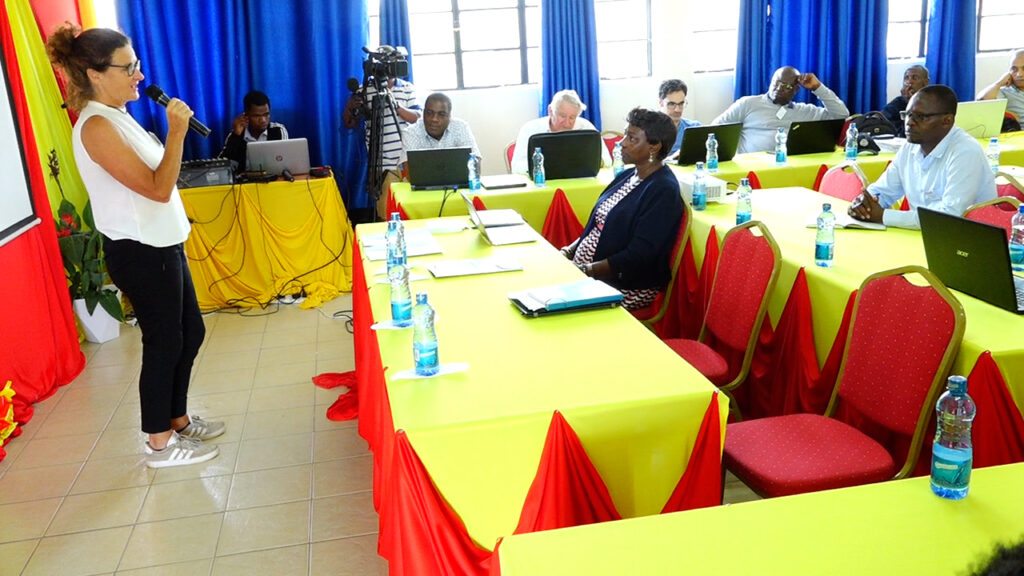
She added that, “We support master’s or PhD training or programs not only for Kenyans but also for others in Kenya or abroad, but in sub-Saharan Africa. We select particular courses to ensure the quality of this program so that the money is well invested.”
Weyler also encouraged local universities to leverage European Union funding opportunities to sustain and expand their educational initiatives.
“What I really want to encourage the people here on the ground, together with their German partners, is to make use of the money from the European Union, which will increase dramatically in the next few years to support this region. And there we also have particular fundings for mobility, but also for institutional support within the Erasmus Plus program,” said Weyler.
Prof. Jan Bongaerts from Technische Universität, Freiberg highlighted the importance of lifelong learning stating that these seminars serve as a cornerstone for graduates to reconnect, share experiences and discuss real-world impact of their education in their motherland.
“Our seminars allow graduates to reconnect, share experiences, and discuss the real-world impact of their education,” he said.
Bongaerts emphasized that the program’s success is evident in the number of graduates now holding significant positions both locally and internationally.
“The impact of the program is very visible in the sense of first, we generated bachelor’s, then we had master’s students, many of them are in good employment positions also internationally and now we are developing PhD candidates also coming out of this program,” said Bongaerts.
Recently, President William Ruto stated that the Kenyan and German governments have signed an agreement on sharing of labor, talent and mobility in a move aimed to open more job opportunities for Kenyan professionals as well as facilitating the mutual recognition of professional qualifications for Kenyan workers.
“One of the issues that I actually raised with the German Chancellor was how do we have mutual recognition of skills and it is provided for in disagreement,” President Ruto stated adding that, “We will now work on how does a plumber in Kenya, an engineer in Kenya, a nurse in Kenya, how do we make sure that they have the same qualification so that when you come from Kenya as a nurse, it is already recognized that if you are licensed as a nurse in Kenya, it is the same licensing that can get you into the German space.”
As Taita Taveta University continues to lead in engineering education, the collaboration with DAAD and support from the Kenyan government signal a strong commitment to enhancing educational standards and expanding professional opportunities for Kenyans.
Apart from reinforcing the existing partnerships, the workshop also paves the way for future collaborations, ensuring that graduates are well-equipped to meet both local and international demands.
