



The Kenya Private Sector Alliance (KEPSA) has formalized a strategic partnership with Kenya’s six Regional Economic Blocs by signing a Memorandum of Understanding (MoU) aimed at enhancing public-private dialogue and accelerating economic growth at the county level.
The MoU was signed during the 6th Jumuiya Agribusiness and Blue Economy Investment Conference (JABEIC) at the Taita Taveta National Polytechnic in Voi, Taita Taveta County.
The event brought together key stakeholders, including Kilifi Governor and Jumuiya ya Kaunti za Pwani Chairperson Gideon Mung’aro, who lauded the initiative as a significant milestone in devolving KEPSA’s operations to counties.
Governor Mung’aro, speaking on behalf of the coastal counties of Kilifi, Mombasa, Tana River, Kwale, Lamu, and Taita Taveta, highlighted the importance of the partnership in promoting inclusive development, creating job opportunities, and increasing private sector investments.
“I am happy to be part of this, representing the six counties of Mombasa, Kilifi, Kwale, Tana River, Lamu and Taita Taveta as we join the other five economic blocs in signing this partnership with KEPSA,” said Mung’aro adding that, “It will go a long way in driving inclusive development, reducing poverty levels, increasing job opportunities and private sector investments in the counties.”
He emphasized that aligning all six economic blocs under one partnership would strengthen their collective ability to attract investors, making them more competitive than individual counties or regions like Nairobi.
He also noted that the collaboration would simplify access for investors to counties, paving the way for more robust economic development.
KEPSA CEO Carole Kariuki explained that the partnership aims to address common challenges and leverage shared opportunities by fostering collaboration among counties with similar economic dynamics.
“What we are going to be having is our regional reps for the different regional blocs, and those are the ones who coordinate the businesses in that block to engage with the county governors o that bloc as a unit, so that one reduces the work and the time of engaging each governor and each county” Kariuki explained.
She highlighted that since the inception of devolution in 2013, counties have become critical players in Kenya’s economy, contributing approximately 60% of the GDP.
“Since the inception of devolution in 2013, counties have emerged as vital players in national development, contributing approximately 60% of Kenya’s GDP and serving as critical hubs for economic activity across various sectors,” Kariuki stated.
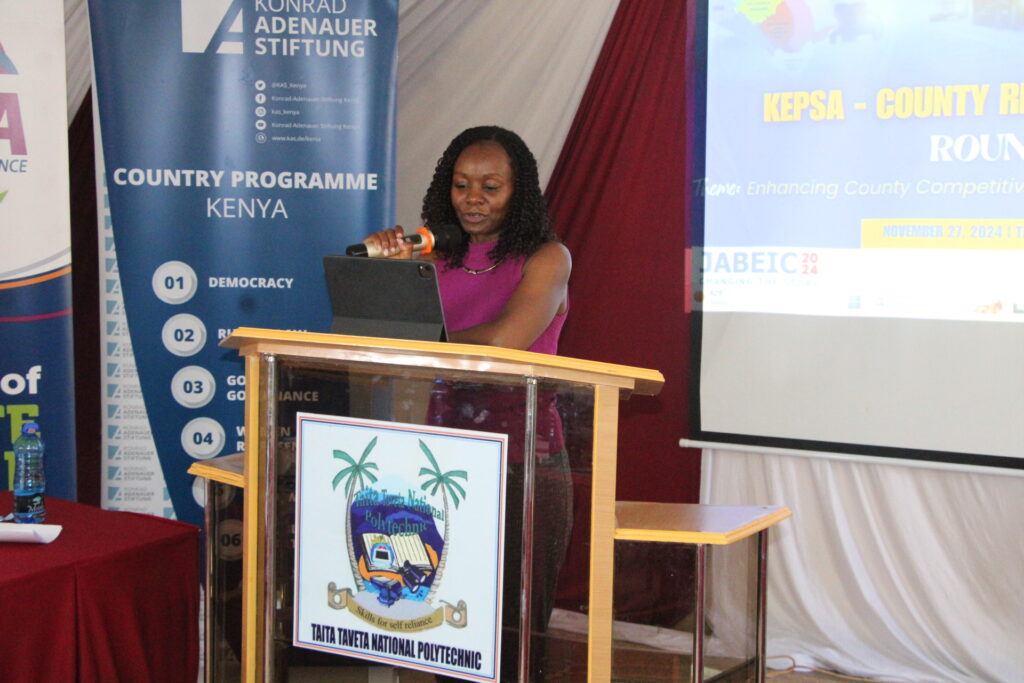
She noted that this partnership represents a defining moment in Kenya’s journey toward unlocking economic potential through collective engagement, enhancing efficiency, and reducing duplication of efforts.
Kariuki further emphasized the significance of the partnership, stating that by aligning public sector goals with private sector expertise, counties could unlock unprecedented growth opportunities.
She noted that the collaboration between counties, supported by data-driven solutions like the Market Intelligence Hub, would ensure that counties effectively address local challenges while maximizing investment opportunities.
The agreement builds on KEPSA’s successful collaborations with various economic blocs, such as Jumuiya ya Kaunti za Pwani, the North Rift Economic Bloc (NOREB), and the Lake Region Economic Bloc (LREB).
These partnerships have achieved significant milestones, including increasing crop exports by 15% and improving food security for over 50,000 households in coastal counties through irrigation investments.
In the North Rift, collaborations have reduced post-harvest losses by 20% and promoted renewable energy through solar-powered irrigation systems, benefiting 10,000 farmers.
Similarly, in the Lake Region, healthcare access has improved by 30% through a regional health fund, and eco-tourism initiatives have increased visitor numbers to attractions like Lake Victoria by 25%, generating substantial revenue for local economies.
The MoU also marks the establishment of the KEPSA-County Regional Economic Roundtable, a quarterly dialogue platform to address regional priorities in areas such as agribusiness, infrastructure, education, healthcare, tourism, and MSME innovation.
KEPSA will appoint regional representatives to coordinate business engagements within each economic bloc, facilitating seamless collaboration between the public and private sectors.
This mechanism mirrors KEPSA’s existing dialogue frameworks at the national level, such as the Presidential Economic Dialogue, the Speakers Roundtable with the National Assembly and the Senate, and the Chief Justice Roundtable.
“The private sector is driving Kenya’s economic growth, and our mandate through this partnership is to work together with the private sector through KEPSA to ensure we collectively increase the competitiveness of the six economic blocs,” noted Jackson Ole Mpario, CEO of the MAA Economic Bloc.
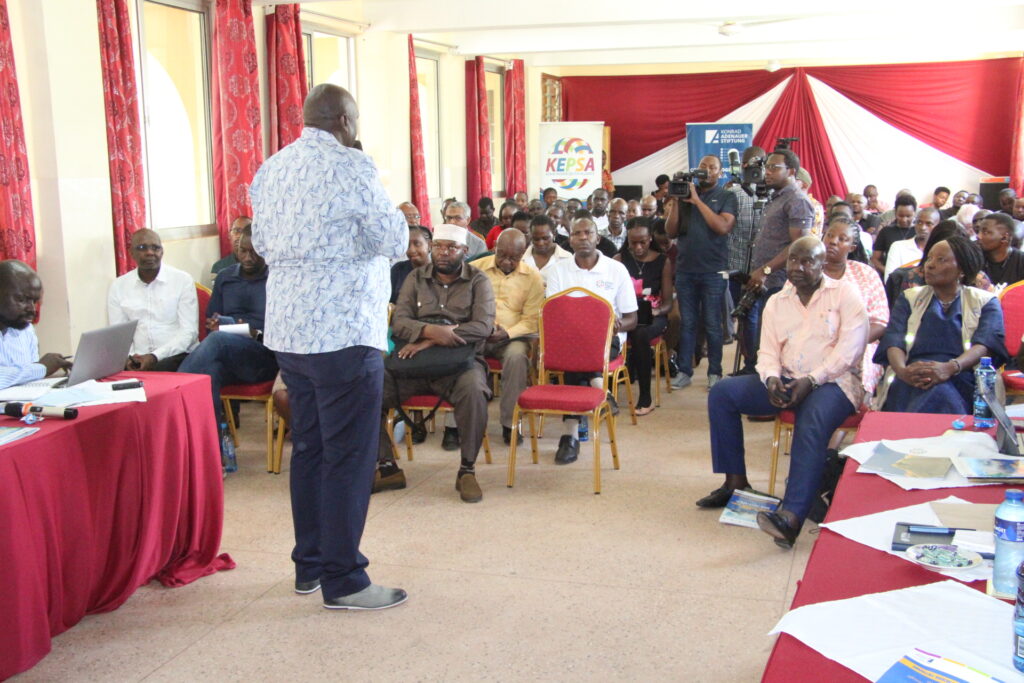
Future engagements within the MoU will align local development goals with national priorities by leveraging real-time data-driven solutions facilitated by the Market Intelligence Hub and actionable insights, driving inclusive economic growth, investment, and sustainability across Kenya’s counties.
“The Market Intelligence Hub is a project by GIZ’s Digital Transformation Center Kenya, in partnership with KEPSA, to centralize data on public sector bankable projects. This will enable informed decision-making to tackle local challenges while maximizing investment opportunities across counties,” said Joash Gomba, Chief Technical Officer, Verus Africa.
Eng. Patrick Obath, Chairperson of KEPSA Foundation, noted that the partnership would help harmonize policies across counties, creating a more conducive environment for private sector investment.
He emphasized the private sector’s critical role in driving Kenya’s economic growth and highlighted KEPSA’s commitment to working with the six economic blocs to enhance their competitiveness.
Speaking at the event, KEPSA’s technical partner, Brian Odome, introduced the Market Intelligence Hub, a platform developed in partnership with GIZ and the European Union.
The hub aims to address the challenge of inadequate data on investment opportunities by centralizing information on bankable projects across counties.
Odome explained that the hub would enable counties to showcase their projects effectively, attracting investments in areas such as renewable energy, agribusiness, and the blue economy.
“It’s a collaboration between GIZ, the European Union, KEPSA and now the counties. We are going to be offering this platform to all counties for free to just provide linkages to investment opportunities that exist within the counties to outside looking investors,” he explained.
Odome stated that this innovation is expected to reduce reliance on national government disbursements by opening new channels for investments in areas like renewable energy, the blue economy, and agribusiness.
“This opens a new channel for counties to be able to expose themselves to market themselves and the opportunities which lie within and specifically in the region we’re in today, which is a Jumia region. Things such as renewable energy, things like blue economy, things like smart Agri business, all these kinds of things can be brought to the surface and showcased to outside investors,” he added.
In addition to economic initiatives, KEPSA Foundation also conducted a tree-planting drive at the Taita Taveta National Polytechnic, with over 500 tree seedlings planted.
The activity, conducted in collaboration with Dow Chemicals and ChildFund, is part of the Kijani Initiative under KEPSA Foundation’s priority area of Community Climate Action and Sustainability.
This initiative seeks to establish orchards in schools across six counties, including Taita Taveta, Makueni, Kirinyaga, Kiambu, Embu, and Tharaka Nithi. It aims to enhance nutrition, increase tree cover, promote economic empowerment, and instill environmental responsibility among students and surrounding communities.
