

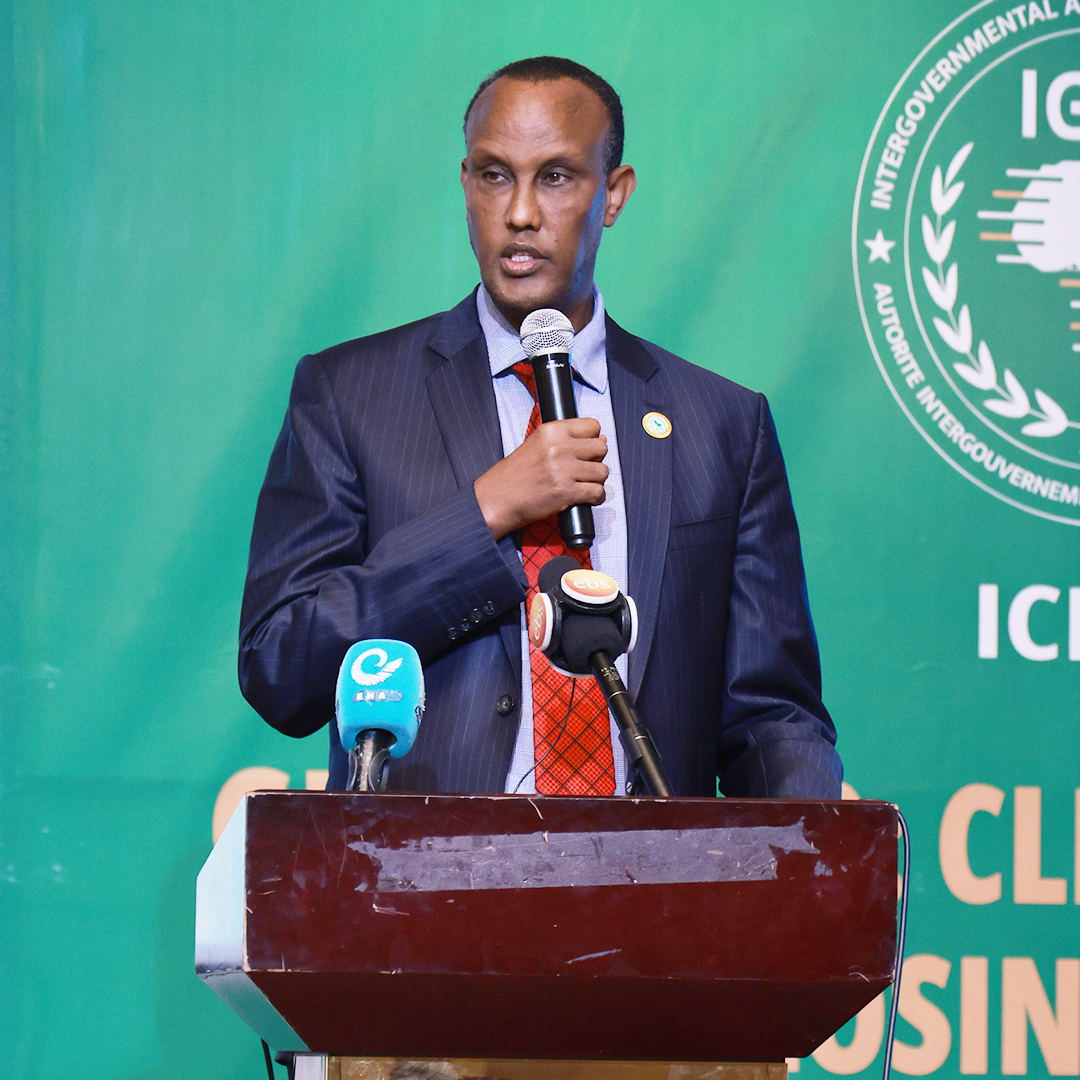

The Executive Secretary of IGAD, H.E. Dr. Workneh Gebeyehu, said during the 69th Greater Horn of Africa Climate Outlook Forum (GHACOF69), that the IGAD region has experienced alarming climatic extremes over the past year.
In his speech read by Dr. Abdi Firad, ICPAC’s Officer –in-charge, on behalf of IGAD Executive Secretary Dr. Workneh Gebeyehu, he said the region has faced cyclones, extreme heatwaves, devastating floods, and heightened rainfall, and only for this to transition into prolonged dry spells and below-normal rainfall across most parts of the region.
Gebeyehu added that, these patterns of volatility highlight the increasing uncertainty in our climate and the urgent need for robust systems to anticipate, respond to, and mitigate these impacts.
“GHACOF has become a cornerstone of our region’s resilience and adaptation efforts to climate change and extreme weather events. Through GHACOF, we strengthen our capacity to generate, interpret, and utilize climate information to safeguard lives, livelihoods, and ecosystems, he adds.
At the same time he cited that, as the region face increasing climate variability and extremes—droughts, floods, and rising temperatures—platforms like this are essential for building a shared understanding of risks and fostering collaboration to mitigate their impacts.
The theme of this forum, “Climate Services for Closing the Early Warning Gap Together,” underscores the critical role of actionable, timely, and accurate climate information in bridging gaps in preparedness and response. According to him, IGAD, has long recognized that addressing climate change requires coordinated action across borders and sectors.
Additionally, H.E Gebeyehu said, guided by their mission, they have launched and supported numerous initiatives, including:
In 2007, the IGAD Heads of State and Government issued a declaration on climate change and drought, acknowledging the profound impact of climate change on food security and regional stability. This recognition led to the establishment of the IGAD Climate Prediction and Applications Centre (ICPAC), aimed at enhancing access to climate and early warning information across member states.
In 2022, during the IGAD Nairobi Summit on Climate Adaptation and Financing, member states recognized the pressing need for financial support to bolster climate adaptation efforts. The summit underscored the importance of establishing a regional climate fund to facilitate and streamline the mobilization of resources dedicated to climate resilience initiatives.
In 2011 Summit on Ending Drought Emergencies emphasized integrating climate change adaptation into national development plans and the need for timely early warning and early action systems. This resulted in the creation of the IGAD Drought Disaster Resilience and Sustainability Initiative (IDDRSI), which enhanced sustainable solutions to food security, water management, and economic growth in the IGAD region.
On 8 October 2024, during the IGAD Ministers’ Meeting on Finance and Planning, it was resolved that climate services should be integrated into national policies, plans, and programmes to enhance climate resilience and sustainable development.
In line with the theme of this forum, we are committed to accelerating the integration of climate services into decision-making processes, ensuring that no one is left behind in the face of climate risks.
At the same time he seized the moment to urge ICPAC to expedite the establishment of the Regional Framework for Climate Services. A framework that will serve as a vital tool for coordinating efforts, harmonizing policies, and delivering targeted climate services across the region, promising on behalf of IGAD, to fully support this framework by:
Strengthening linkages between IGAD Divisions, specialized institutions, and national climate-sensitive sectors to enhance synergy and impact.
Collaborating with IGAD Ambassadors, ICPAC, National Meteorological and Hydrological Services, and Member States’ designated ministers to streamline the representation of National Sector Focal Points within the framework.
Leading the endorsement of the Regional Framework for Climate Services by the Council of Ministers to ensure high-level political backing and accountability.
Supporting the formulation of a regional climate services policy to facilitate the effective implementation of the framework and enable tangible outcomes.
I hope and believe the above-mentioned support will stimulate the provision of climate information to support the planning and decision of individuals and organizations, at all decision-making levels. Furthermore, we shall have revitalised and sustainable GHACOFs to ensure the climate information needs of all stakeholders are catered for.
The stakes have never been higher, but neither has our determination. Let us seize this moment to forge stronger partnerships, embrace innovation, and commit ourselves to meaningful action. Together, we can build a more resilient, adaptive, and prosperous IGAD region in the face of climate change.
