

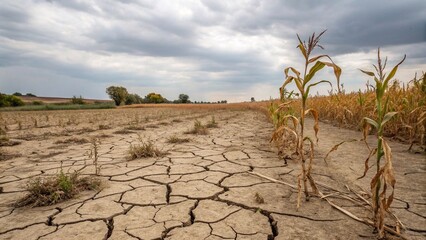

The National Drought Management Authority (NDMA) has issued a drought alert to Kwale County with many places facing drought due to delayed rains.
According to NDMA Kwale County Coordinator Abdulah Halakhe, according to the government-led assessment conducted in November last year, more than 90,000 people from the county required food assistance after being affected by drought. He also expressed fear that the numbers may change once a new assessment, which has already begun, is concluded.
“We are conducting another assessment to establish the current situation. This exercise will look at households, food availability at home, in markets, farms, and weather conditions so that we clearly understand the nutrition status of Kwale County residents” said Halakhe.
He said even as the assessment is underway, the government continues with relief food distribution exercises in drought-hit areas, including school through feeding programmes aimed at supporting learners.
“The government is already distributing food to affected households, and schools to ensure no lives are lost due to hunger and no children will drop-out of class because of hunger,” he said.
The situation has attracted the attention of humanitarian organisations who are complementing government efforts on the ground targeting the most vulnerable ones like children and elderly.
“The Kenya Red Cross Society in Kwale is providing porridge flour to children under five years in Kinango, while Plan International is supporting some affected households through cash transfer programmes,” said Abdullah.
He noted that the national government, through NDMA, is also implementing water-related interventions to support the county’s response, particularly in the most affected institutions.
“We are working to ensure water reaches communities and institutions such as schools, especially in areas facing serious shortages,” Halakhe said.
NDMA has clarified that although Kwale county is on drought alert, it has not yet reached emergency status. However, he acknowledged that some areas are already experiencing critical conditions.
“The alert status reflects an average situation across the county, but areas such as Kinango, Samburu, and Macknon currently require emergency support,” he said.
He explained that poor rainfall during the short rains season had been accurately predicted using both scientific forecasts and indigenous knowledge.
“Farmers were advised early that the season would not receive enough rain and were encouraged not to sell all their produce. Unfortunately, many sold their food stocks, and now most households have no food,” Halakhe said.
He urged pastoralists to take early action to minimize losses during the dry season.
“Pastoralists should sell animals that may not withstand the dry conditions while markets are still favorable and retain strong livestock,” he advised.
The public has been asked to invest in long-term adaptations to changing climate patterns as a lasting solution to the drought persistence.
