


Africa is home to over 636 million hectares of forest, accounting for about 20% of the continent’s landmass and roughly 16% of the world’s total forest cover.
These forests are vital, holding 25% of the world’s biodiversity and serving as a lifeline for millions across the continent. But as the climate crisis deepens, the role of Africa’s forests becomes even more critical.
From the mangrove forests of East and North Africa that support the blue economy to the vast Congo Basin rainforest, Africa’s forests are as diverse as they are essential.
The Congo Basin, the second-largest rainforest globally, is a critical carbon sink, helping mitigate climate change while fueling the timber industry in countries like Uganda, Tanzania, and Kenya.
Further south, the Miombo woodlands of Southern Africa play a key role in biodiversity conservation, providing sanctuary to lions, elephants, and wild dogs, while supporting the tourism sector.
The Sahel parklands in the north provide essential pastures for livestock, and the mountain forests of East Africa are home to unique endemic species, including the beautiful African violet (Saintpaulia ionantha).
Forests like these are more than just trees. They are lifelines for millions.
“At least 500 million people in Africa live within 5 km of a forest,” says Dr. Doris Muta, a senior program officer at the African Forest Forum (AFF) noting that “Forests not only support livelihoods but are critical to both local and national economies.”
Yet, despite their importance, Africa’s forests face significant threats. Deforestation, illegal logging, and the effects of climate change are taking a heavy toll on these vital ecosystems.
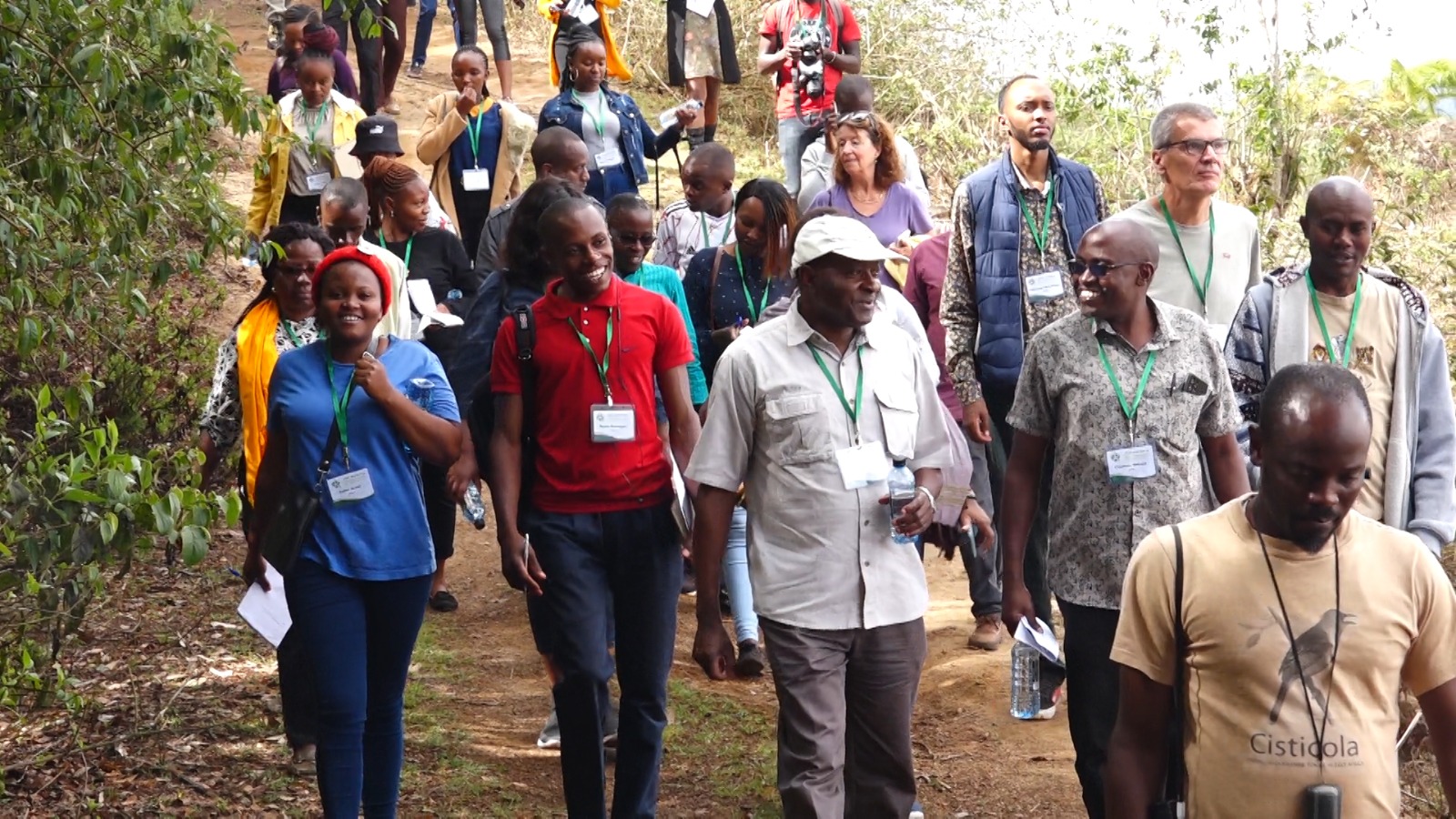
With this degradation in mind, the African Forest Forum is spearheading efforts to involve Africa’s youth in forest conservation, empowering the next generation to become environmental stewards.
With over 420 million young people on the continent, Africa’s youth are a powerful force for change.
“We are training youths on how to manage natural resources because they are the future. Many of them are not currently engaged in conservation, so this training is essential to ignite their interest,” Dr. Mutua explained.
The AFF is not only providing education but also creating pathways for economic opportunities.
By promoting agroforestry including integrating trees into farming systems, the organization aims to help farmers increase productivity while reducing reliance on forest resources.
“We want the youth to see the economic potential of natural resources, especially through value addition,” says Dr. Muta.
The AFF’s conservation efforts span the continent. Africa’s forests are divided into three major regions namely Eastern and Southern Africa (297 million hectares), Central and Western Africa (300 million hectares), and Northern Africa (16 million hectares).
In these regions, AFF is working with young people to approach conservation not just as a duty but as a livelihood.
“The idea is to empower African youth to create jobs through the sustainable use of natural resources,” explains AFF CEO Prof. Godwin Kowero stating that, “If we are to protect our forests and mitigate climate change, we must involve the youth.”
Climate change is an urgent concern across Africa, with shifting rainfall patterns leading to food insecurity and the loss of livestock and crops.
In Kenya, both former President Uhuru Kenyatta and current President William Ruto have set ambitious targets to increase tree cover to 30% by 2050, as part of the country’s climate action strategy.
The Kenya Forest Research Institute (KEFRI) is at the forefront of this initiative, tasked with producing over 100 metric tons of tree seeds annually.
“The government plans to mobilize Ksh 600 billion to plant 10.6 million hectares of trees across public, private, and community lands. Our target is to enlist 2 million youth over the next three years to help meet this goal,” said Dr. Joshua Cheboiyo, the National Director of KEFRI.
Already, young people across Africa are stepping up. Marion Otema, a student at Strathmore University, leads the Panda Miti Initiative, which has successfully planted 1 million trees.
“We realized that many people don’t know what types of trees are best suited for their areas. We use art, storytelling, and mentorship to educate communities on climate action,” she explains.
Meanwhile, eco-activist Collins Towet has founded the Havoc Organization, which works with schools, universities, and communities to research and implement conservation strategies.
“One of our key projects, Saving the Planet One Point at a Time, encourages people to keep their environment clean by recycling plastic bottles. We’re also pushing for better environmental policies through our Green Carpet events, where professionals and leaders come together to discuss climate action,” Towet shares.
Another young conservationist, Josephine Wughanga, was inspired by her father’s love of fruit trees.
Today, she’s an agroforestry graduate who volunteers at various institutions, propagating trees and raising awareness about conservation.
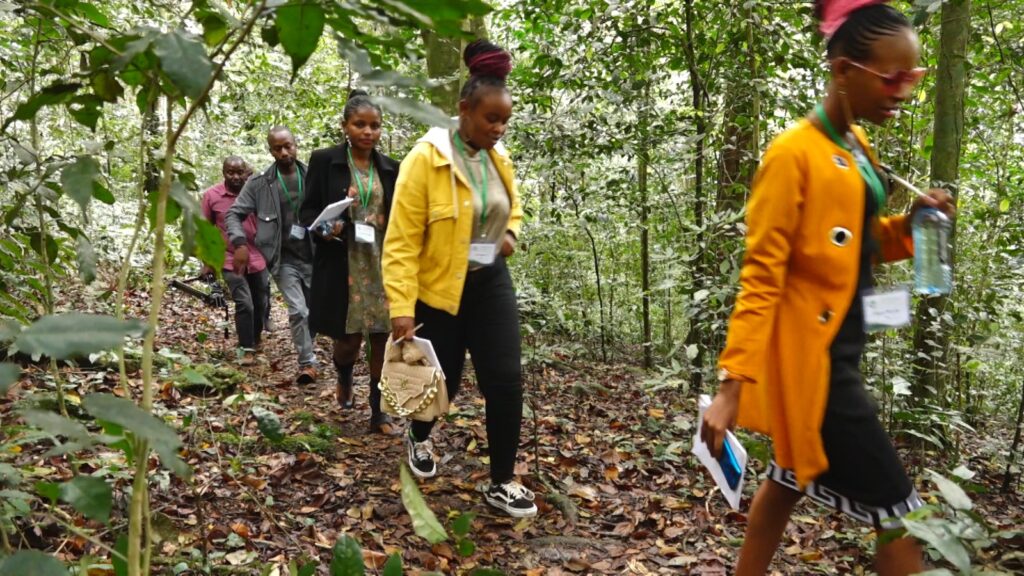
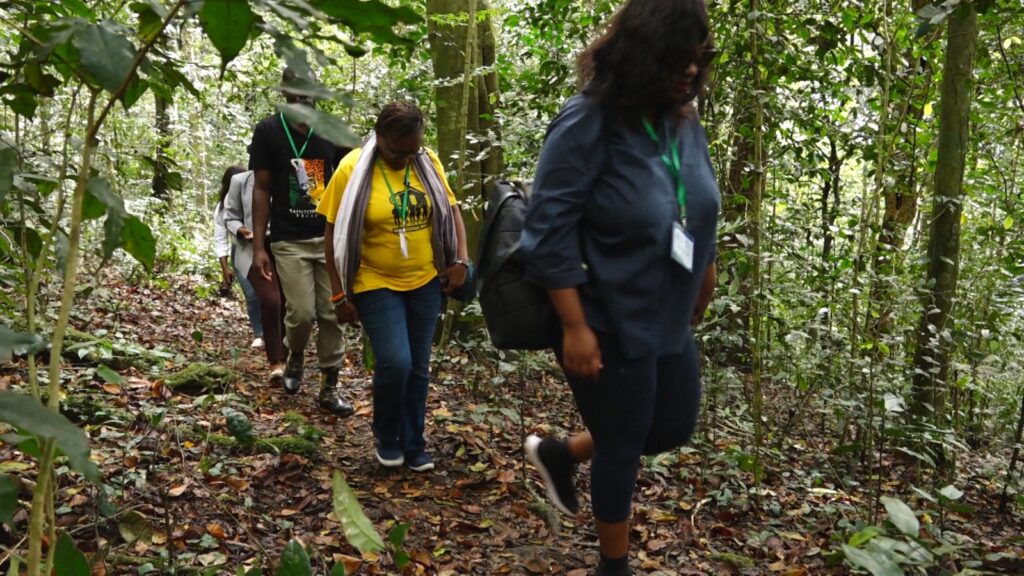
At a recent AFF workshop in Voi, young conservationists visited the stunning Ngangao Forest in the Taita Hills. Managed by Dawida Biodiversity CBO.
Ngangao is a rare rainforest that boasts tree species and birds found nowhere else in the world.
Walking through the cool, misty forest, the youth were struck by the living testimony of what conservation can achieve.
“Butterfly farming in Ngangao used to be a thriving venture. We used butterflies as natural indicators of rain, but due to climate change, we haven’t seen them for two years, affecting our livelihood,” said a local farmer Amos Mwamburi.
As Africa continues to battle the impacts of climate change, it is clear that the continent’s forests are more crucial than ever. The African Forest Forum’s engagement with young people is a beacon of hope, empowering them to lead the charge in conservation.
With COP27 climate commitments now on the horizon, the forum’s youth army stands ready. “We have the knowledge, we have the passion, but we need the support of governments and NGOs to help us achieve our goals,” the youth said in a collective pledge.
Africa’s green future depends on these young ambassadors and their commitment to safeguarding the continent’s forests for generations to come.
