


Gender-Based Violence (GBV) continues to escalate across the country despite concerted efforts by the government, non-governmental organizations, and human rights activists to combat the vice.
In Taita Taveta County, rising cases of GBV have sparked debates on systemic gaps, including inadequate support structures and long-standing cultural norms that perpetuate inequality.
Activists and stakeholders are now urging for greater collaboration and accountability to protect vulnerable groups, especially women and girls.
According to research developed by the United Nations Office on Drugs and Crime (UNODC) and UN Women, most killings of women and girls are gender-motivated, and intimate partners or other family members are the most likely perpetrators of femicide.
Charity Bahati, Director of Gender in the State Department for Gender and Affirmative Action, stated that the cases of GBV in the county this year have increased compared to previous years.
“According to our statistics, between January and October this year, over 400 cases of gender-based violence were reported,” she noted.
Bahati attributed the rise in GBV cases to increased awareness campaigns by various organizations, which have reduced stigmatization and encouraged survivors to report cases.
“Because of raising awareness against GBV even in rural areas, more people are now willing to report these cases,” Bahati added.
Additionally, Bahati expressed concern about the lack of a rescue center in the county to shelter and support GBV survivors.
“The biggest challenge we’re facing is the lack of a safe space where survivors can seek shelter as their cases are being considered,” she explained.
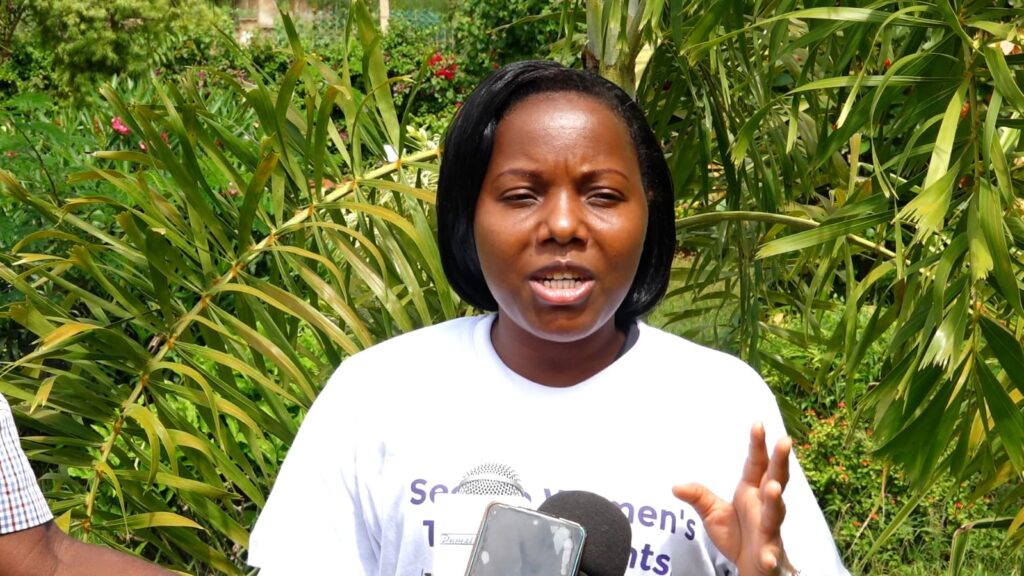
Land ownership also remains a significant factor in GBV cases in Taita Taveta County, with most landowners being men. However, societal perceptions are shifting due to awareness campaigns by women’s rights organizations advocating for equal land rights for women and youth.
During the 2024 Human Rights Day celebrations in Voi, activists stressed the need for women and youth inclusion in land decision-making processes.
According to Mr. James Mutua, Director of Lands in Taita Taveta County, women’s land ownership in Kenya has increased significantly since the 2010 Constitution, rising from less than 10% to 43%.
“Because of the interventions we’re implementing to ensure women’s inclusion in land issues, we’ve seen an increase in women owning land in Kenya,” Mutua said.
He also noted that women and youth are now included in community land registrations and land control boards, unlike in the past when these roles were reserved for elders, clan leaders, and heads of households.
“During community land registrations, we make sure to include everyone aged 18 and above. We’ve also championed for equal representation in land control boards,” Mutua stated.
In addition, Mutua highlighted that women and youth now play a role in resolving land disputes.
Mr. Paul Oling’a, a land rights activist, emphasized the importance of women and youth owning land.
“In all our trainings, we advocate for women’s rights to land ownership. Society must appreciate women’s contributions to food security through agriculture by ensuring they can own and manage land,” Oling’a said.
However, Oling’a criticized the historical injustices in resource distribution in Taita Taveta County, where men have dominated access to land, minerals, conservancies, and other community resources.
“It’s very sad that in the 21st century, women, girls, and youths in Taita Taveta County are excluded from land management boards in most ranches and community land. This puts resources at risk, especially since most directors are above 55 years, leaving the younger generation in the dark,” he added.
As the 16 Days of Activism against Gender-Based Violence concluded, parts of the country, including Nairobi, witnessed street demonstrations against the rising incidents of violence against women, such as kidnappings and killings. Demonstrators called on the government to take urgent action.
In Voi, human rights activists led by Hajj Mwakio of Human Rights Watch Taita Taveta organized a march through the CBD, carrying placards with messages such as “End Femicide Now,” “Stop Killing Us,” and “Say Their Names.”
Between August and October, the National Police Service reported at least 97 femicides in Kenya.
Human rights activists are now challenging state and non-state actors to fully implement recommendations from various groups to address the alarming rise in GBV cases, which predominantly affect women and girls.
