


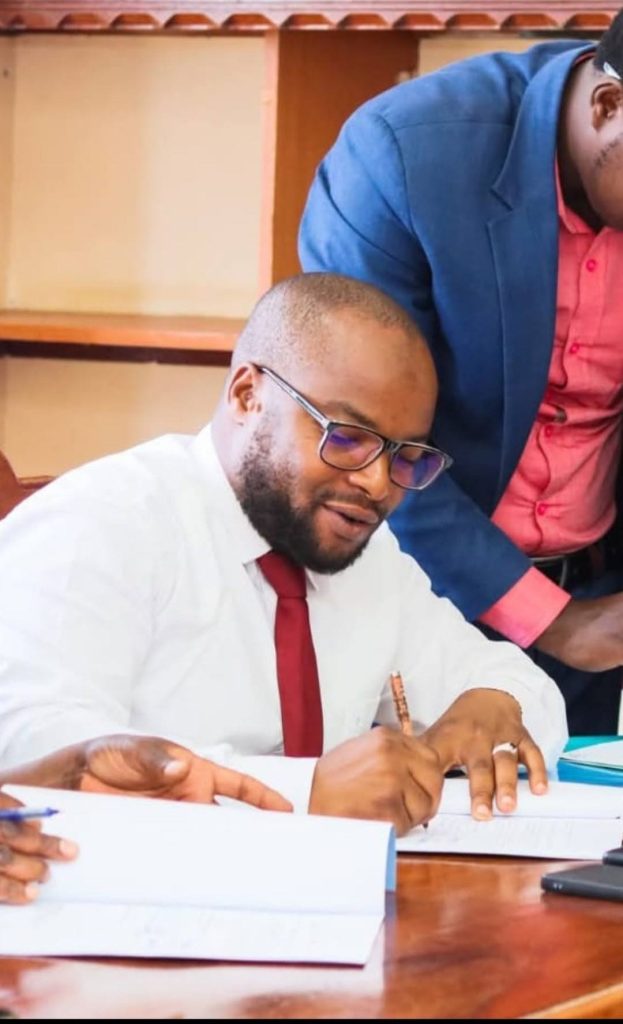
Wilfred Mwalimo, Secretary, Kishushe Ranching Cooperative Society Limited.
For decades, the people of Kishushe have lived with a paradox. Beneath our land lies immense mineral wealth, yet many families have continued to struggle with poverty, unemployment and limited economic opportunities. We have watched investors, governments, experts and institutions discuss the potential of our natural resources, while ordinary residents waited patiently for the day those resources would finally transform lives.
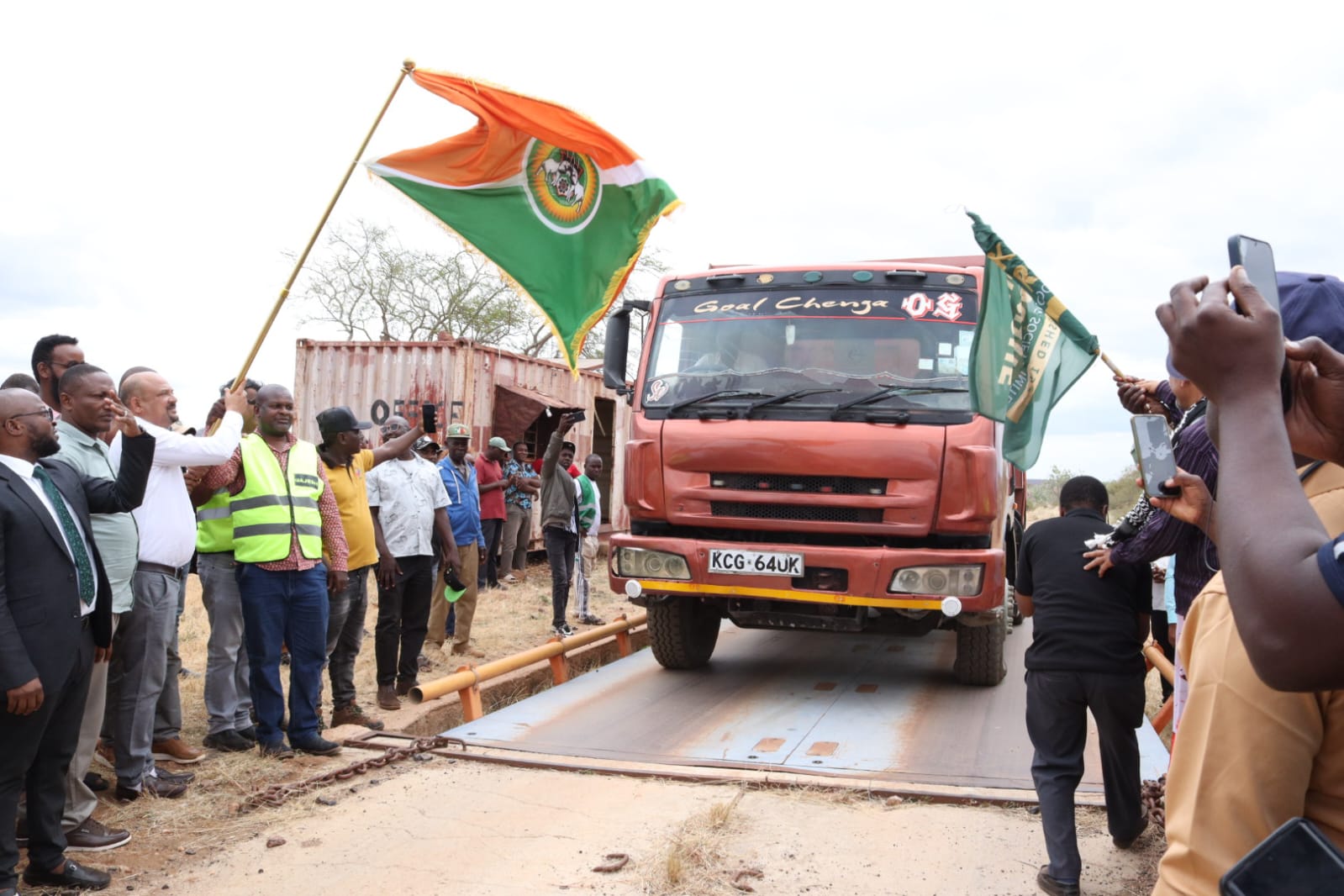
Today, that day appears closer than ever before. The official commencement of iron-ore haulage in Kishushe marks a historic milestone not only for our community but also for Taita Taveta County and Kenya’s mining sector. For many people, the sight of trucks beginning their journey carrying iron ore may simply represent the start of a commercial operation. For us, however, it symbolizes something much bigger. It represents hope, progress and the possibility of finally turning our natural resources into meaningful development.
As I stood before residents during the flag-off ceremony, I could not help but think about the generations that came before us. Many of our forefathers believed that the mineral wealth found in Kishushe would one day improve the lives of their children and grandchildren. Some of them did not live long enough to witness this moment. Yet their vision and determination laid the foundation for what we are now beginning to achieve.
That is why I described the occasion as a historic moment for the people of Kishushe. It is the realization of a dream that has taken decades to reach.
But history teaches us that natural resources alone do not guarantee prosperity.
Across Africa and indeed across the world, there are countless examples of communities blessed with abundant mineral wealth but trapped in poverty. There are regions where mining has generated enormous profits while leaving local people behind. There are places where resources have fueled conflict instead of development, division instead of unity, and environmental degradation instead of prosperity.
Kishushe must chart a different path. Our objective should not simply be to mine iron ore. Our objective should be to use mining as a catalyst for broader social and economic transformation.
The first lesson we must embrace is that development can only succeed when communities are involved.
For many years, mining activities in Kishushe faced challenges arising from disputes, misunderstandings and competing interests. Those challenges delayed progress and frustrated residents who had hoped to benefit from the resources found on their land.
The breakthrough we are witnessing today did not happen by accident. It required dialogue, patience and the willingness of various stakeholders to find common ground. The support of the national government through the Ministry of Mining, the cooperation of county leadership, the commitment of investors and the resilience of the community all played an important role.
This is why I continue to urge residents to embrace dialogue whenever disagreements arise.
Development projects of this magnitude inevitably generate questions and concerns. Such concerns are legitimate and deserve to be addressed. However, dialogue remains the most effective tool for resolving disputes and ensuring that progress is not unnecessarily delayed.
If there is one lesson from our journey, it is that cooperation achieves more than confrontation.
The second lesson is that community benefits must remain at the center of mining activities.
The people of Kishushe have supported this journey because they believe it will improve lives. They expect employment opportunities, better infrastructure, improved education and increased economic activity. These expectations are reasonable and justified.
As operations expand, investors must continue to demonstrate that local communities are genuine partners in development. Employment opportunities should prioritize qualified local residents wherever possible. Local businesses should be given opportunities to participate in supply chains. Corporate social responsibility initiatives should address community needs and contribute to long-term development.
Equally important is the welfare of workers. During the flag-off ceremony, I made a direct appeal to investors including Samrudha Resources Kenya Limited, Devki Group of Companies and Gajesh Enterprise Limited to ensure that workers receive fair wages and decent working conditions.
I firmly believe that a motivated worker is a productive worker.
When employees are treated with dignity, compensated fairly and provided with safe working conditions, everybody benefits. Productivity improves, workplace relations strengthen and communities develop greater confidence in the investment.
Responsible mining must also include safety. The provision of personal protective equipment, adherence to mining regulations and implementation of road safety measures are not optional obligations. They are essential requirements. As iron-ore haulage continues, we must ensure that residents, workers and road users are protected from avoidable risks.
However, perhaps the greatest challenge facing us today is not mining itself. It is skills. The truth is uncomfortable but it must be acknowledged.
As opportunities emerge within the mining sector, we are discovering that many local residents lack the technical qualifications required for specialized positions. During recruitment exercises, the number of qualified applicants from within Taita Taveta County has been disappointingly low.
In some instances, positions requiring technical expertise have attracted very few applications from local residents. We have advertised opportunities for skilled workers and struggled to find qualified candidates from our own communities.
This should concern all of us.
What would be the greatest tragedy for Kishushe? It would not be the absence of minerals. The minerals are already here. The greatest tragedy would be watching opportunities created by those minerals benefit everyone except the people who live here.
That is why I have repeatedly described the current situation as a wake-up call.
The future of Kishushe will not be determined by the quantity of iron ore beneath our soil. It will be determined by the quality of skills possessed by our people.
We must therefore invest aggressively in education and vocational training.
Vocational Training Centers should no longer be viewed as alternatives for those who do not pursue university education. They should be recognized as strategic institutions capable of driving economic transformation.
The mining industry requires excavator operators, tipper drivers, machine operators, welders, electricians, mechanics, surveyors and numerous other technical professionals. These are skills that can be acquired through focused training programs.
I therefore call upon the County Government of Taita Taveta, the Kenya Institute of Highway and Building Technology and other institutions to collaborate in providing relevant training opportunities for our youth.
We should establish and equip vocational training centers capable of producing graduates who are ready for employment in mining and related industries.
If we fail to do so, many of our young people risk becoming spectators in an economy that should belong to them.
Beyond extraction, we must also think about value addition. For too long, Africa has exported raw materials and imported finished products. This model creates wealth elsewhere while limiting opportunities at home.
The ongoing construction of palletization plant in Manga presents an opportunity to change that narrative. Processing minerals locally will create more jobs, generate additional revenue and stimulate industrial growth. Every stage of production retained within Taita Taveta translates into more opportunities for businesses and families.
Another issue that deserves attention is the participation of women.
Mining has historically been viewed as a male-dominated sector. That perception must change.
I fully support the position consistently championed by our Chairperson, Matilda Waleghwa, that women must be active participants in the future we are building. Women should not merely observe the transformation taking place around them. They should be leaders, entrepreneurs, professionals, contractors and decision-makers within the mining ecosystem.
An inclusive mining sector is not only fair; it is also more productive and sustainable.
Finally, we must ensure that the revenues generated from mining contribute to long-term development.
Our vision extends beyond the extraction of iron ore. We envision improved schools, bursaries for students, better healthcare facilities, enhanced infrastructure and thriving local enterprises.
The discussions around utilizing community development funds to support bursaries and school feeding programs reflect the type of impact we want to see. Mining should create opportunities not only for today’s generation but also for future generations.
The dream of transforming Kishushe into a vibrant mining and industrial hub is achievable.
But it will require discipline, transparency, accountability and cooperation from all stakeholders.
Government must provide an enabling environment. Investors must operate responsibly. Communities must remain engaged and united. Educational institutions must equip young people with relevant skills.
If each of us plays our part, future generations will not remember this period simply as the moment iron-ore haulage began.
They will remember it as the moment when a community decided to take control of its destiny and transform natural wealth into shared prosperity.
That is the future we owe the people of Kishushe. That is the future we must build together.
