

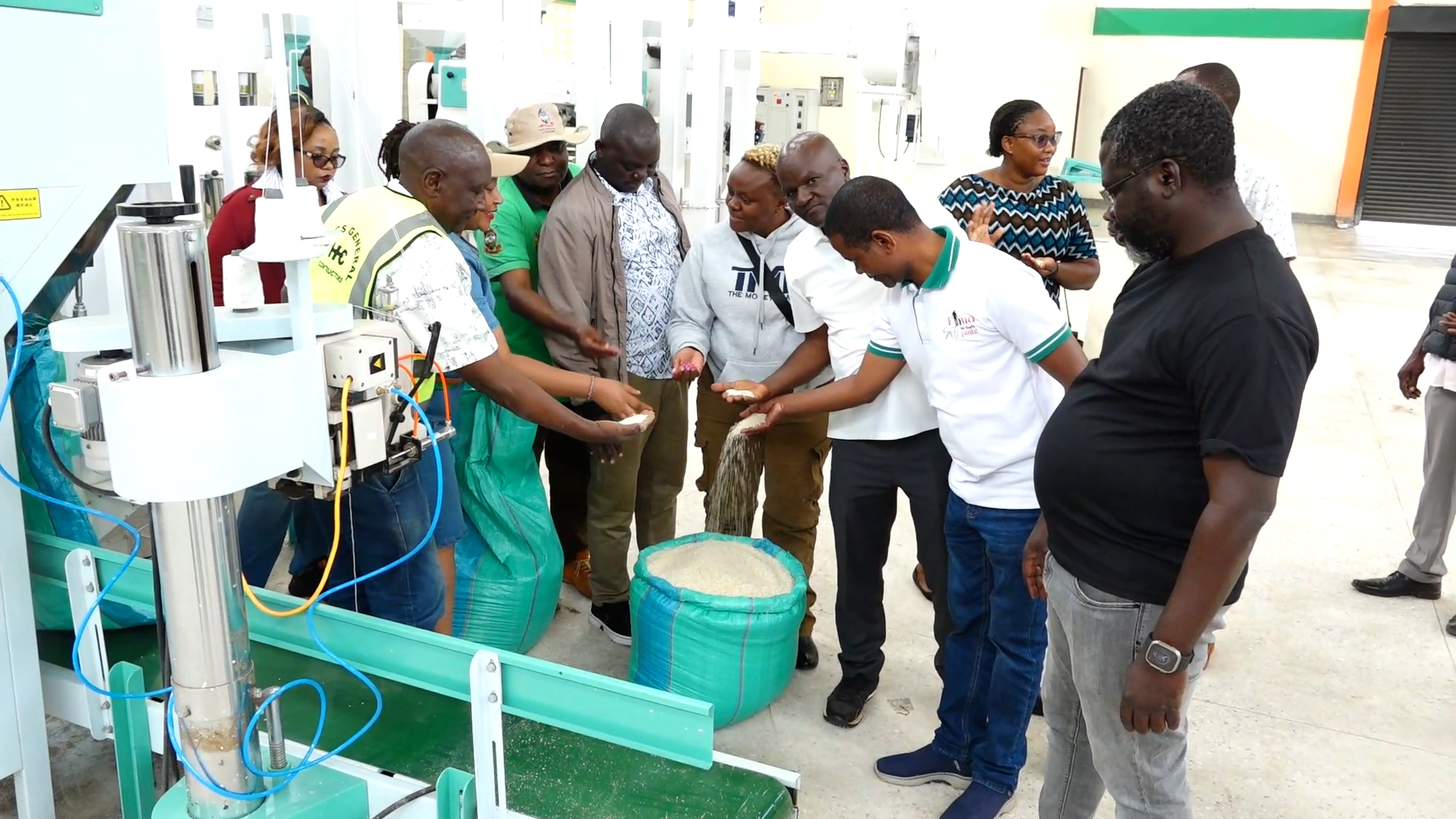

The Taita Taveta County Assembly Committee on Agriculture, Livestock and Blue Economy has expressed optimism that the newly established rice milling plant in Taveta will significantly improve returns for rice farmers while creating employment opportunities across the agricultural value chain.
Speaking during an inspection of the facility, agriculture chief officer Mcharo Mwalugha said the main objective of the rice mill is to enable local farmers to process their rice within the county instead of transporting it to neighbouring regions for milling. They noted that processing rice locally will allow farmers to earn more by retaining valuable by-products that were previously lost to external millers.
“The purpose of having this factory is to help our farmers. Instead of struggling to transport their paddy rice to neighboring regions for milling, they will now have it processed here. Their rice will be milled locally, allowing them to earn greater profits,” said Mcharo Mwalugha
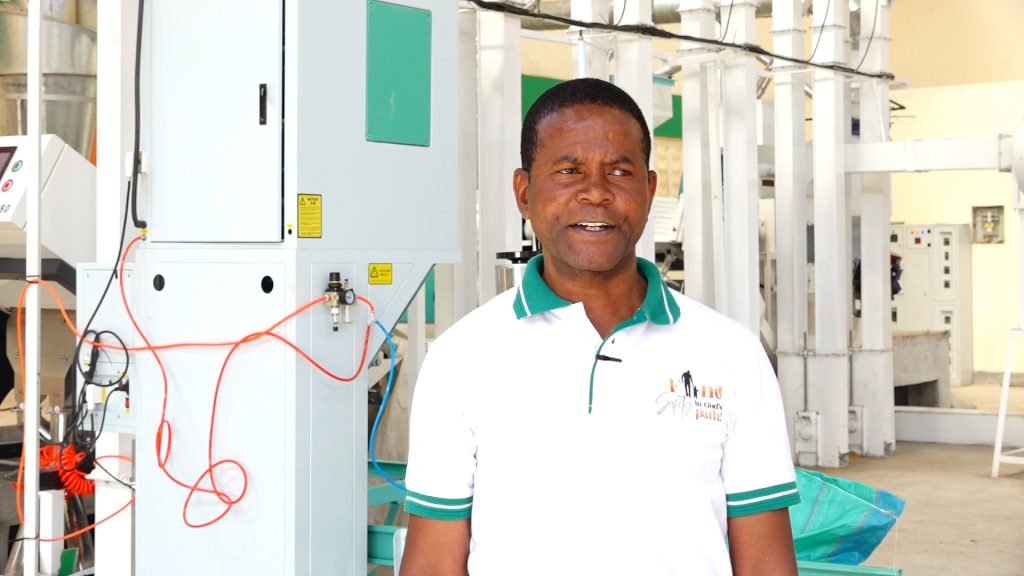
Plant operator expert, Henry Mwaura, explained that when paddy rice is milled outside the county, by-products such as bran, husks and broken rice remain with the processors, despite having considerable economic value. These by-products can be used to produce livestock and poultry feed, creating additional income streams. With the new mill operational, those benefits will now remain with local farmers and businesses.
“In most cases, when farmers take their paddy elsewhere for milling, by-products such as husks, bran and other residues remain with those processors. These by-products are highly valuable because they are used to make poultry feed, livestock feed and other products. When farmers mill their rice elsewhere, those by-products remain there and become profits for people in those other areas. Now, all those benefits will belong to our farmers. Instead of farmers only earning from selling paddy rice, they will also benefit from the value of these by-products,” said Henry.
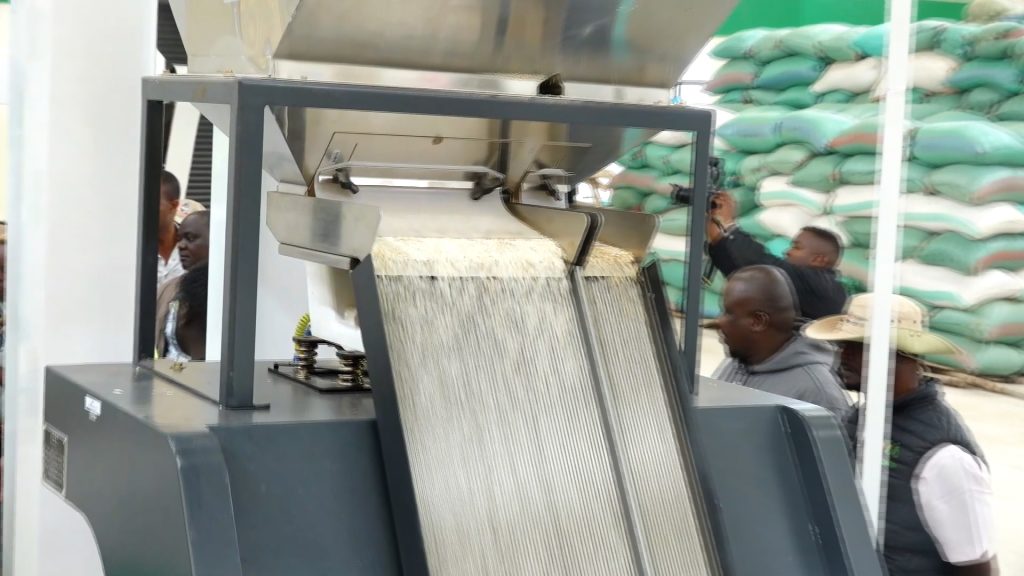
The modern milling plant is equipped with a grading system capable of separating rice into different quality categories, including Grade One, Grade Two, broken rice and chicken feed. According to milling standards, Grade One rice should consist of 85 percent whole grains and 15 percent broken grains. The machine can produce standard Grade One rice or separate premium-grade rice depending on market demand.
“This machine grades the rice automatically. It has a grader divided into four sections: the first produces Grade One rice, the second produces Grade Two rice, the third separates broken rice, and the fourth produces chicken feed. According to milling standards, Grade One rice should consist of a combination of 85 percent whole grains and 15 percent broken grains. In this machine, there is a section where Grade One and Grade Two are processed together to achieve that 85:15 ratio, after which the rice is classified as Grade One. However, if we want premium-grade rice, we can separate the grains so that only the highest-quality whole grains are produced. That is how the grading process works,” Henry explained.
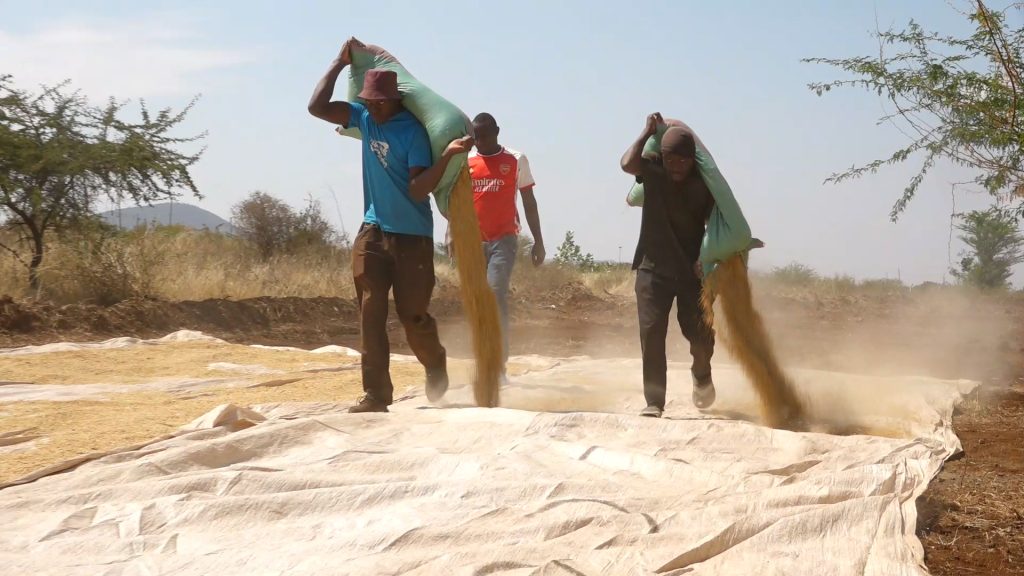
Furthermore, the CECM Agriculture, Livestock and Blue economy Taita Taveta, Dawson Mzenge, has emphasized that achieving high-quality rice begins on the farm. He urged farmers to ensure harvested paddy has the recommended moisture content before milling, noting that excessive moisture reduces the quality and recovery rate of the final product.
“We have observed that the moisture level of some of the rice is slightly higher than required. We have also identified a few things that are needed here, particularly a moisture meter to accurately measure moisture content. We have found that when rice enters the mill with the recommended moisture level, it produces much better-quality rice. Farmers therefore need to dry their paddy to the recommended moisture content before bringing it to the factory,” said Mr. Dawson.
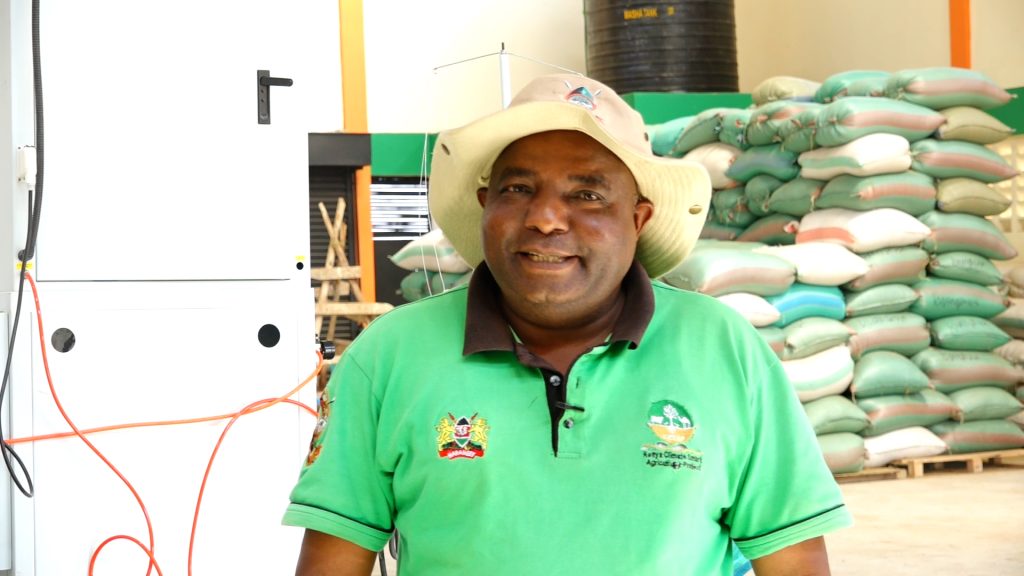
The CECM also revealed that discussions are underway between the county government, the national government and the National Cereals and Produce Board (NCPB) to relocate a rice dryer currently stationed in Voi to Taveta, enabling farmers to dry their produce locally before processing.
“We appreciate the partnership between the county government and the national government, and I can say that we already have a rice dryer stationed in Voi. We have engaged the National Cereals and Produce Board (NCPB) so that it can be brought here, enabling farmers to dry their rice locally before milling. This will ensure the paddy enters the milling plant with the correct moisture content and produces the best possible quality,” he further elaborated.
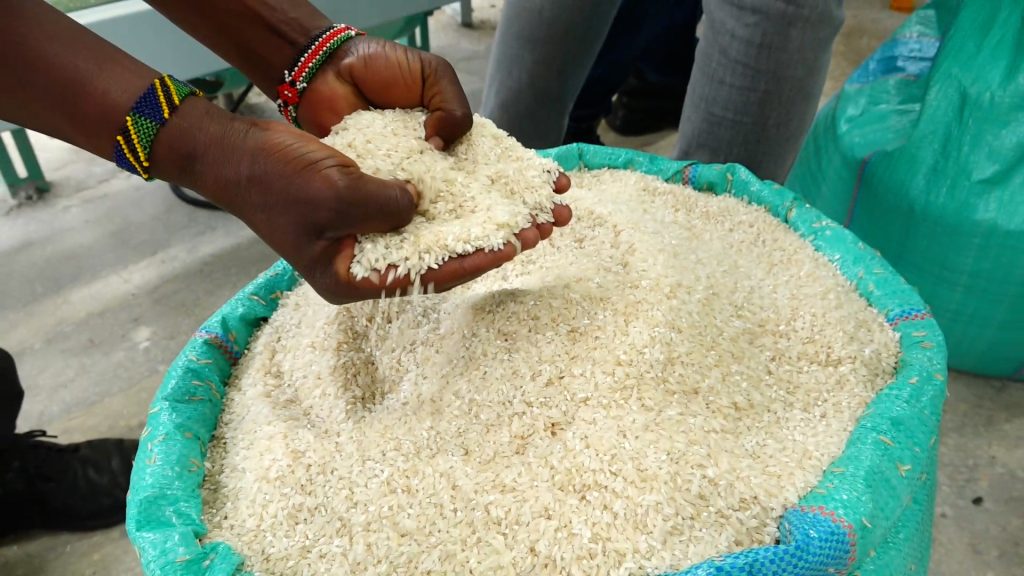
Moreover, Mr. Mwaura explained that under ideal conditions, every 100 bags of quality paddy should yield approximately 65 percent sellable rice, 25 percent husks, 10 percent rice bran and five percent broken rice. Lower recovery rates, he said, are often an indication of poor crop management or improper handling before milling.
“For example, if we process 100 bags of paddy rice, we should obtain about 65 percent sellable rice, 25 percent husks, 10 percent rice bran and five percent broken rice. If we only recover around 55 percent sellable rice, that indicates there was a problem with the crop while it was being grown on the farm. We therefore encourage our farmers to produce and handle their rice properly before bringing it to the mill so that we can obtain a high-quality product that can be sold to customers without any problems,” he explained.
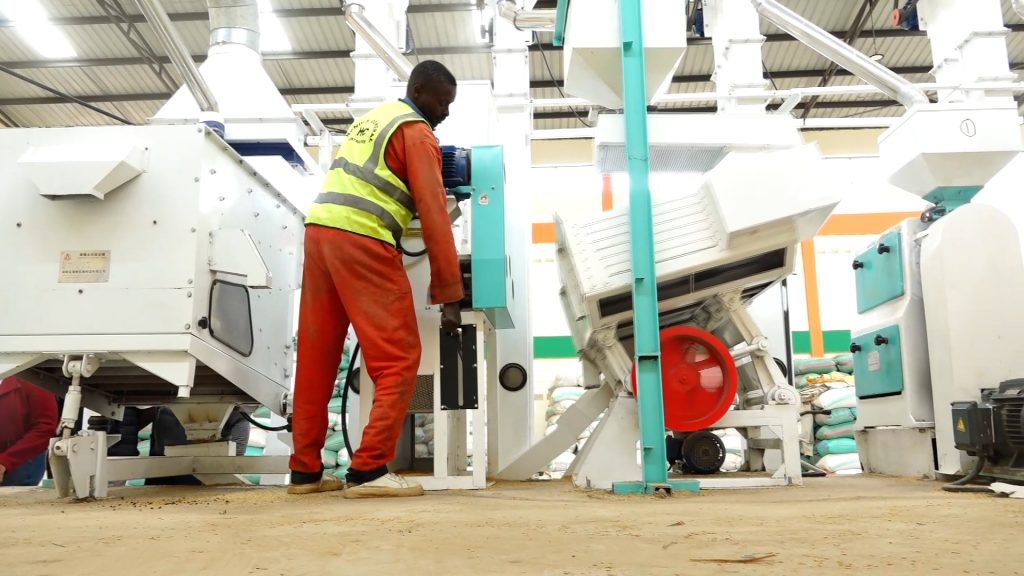
The CECM, Mr. Dawson Mzenge described the rice mill as a major milestone in Taita Taveta’s journey towards industrialization, saying it will stimulate employment throughout the rice value chain—from farmers and suppliers of seeds and farm inputs to transporters and workers employed at the processing plant.
“This marks the beginning of industrialization in Taita Taveta County. We have seen this factory established, and we hope many more factories will be built in Taveta and across other parts of the county to improve employment opportunities. This value chain will create jobs for many people. It starts with the farmers, who will benefit directly. It will also create employment for suppliers of rice seed, fertilizer and other farm inputs. There will be jobs in transporting paddy from the farms to the factory, and the factory itself will employ people to operate the milling plant,” said Mr. Dawson.
In addition, the Chief officer Agriculture Manager Mcharo Mwalugha said the Rice Milling plant requires high volume of rice production saying the current 2000 Rice farmers population producing only 8,700 tons per year farming in about 1200 hectares of rice saying it cannot fully utilize the plant. According to Mwalugha Taveta has a potential of producing over 30, 000 hectares of rice
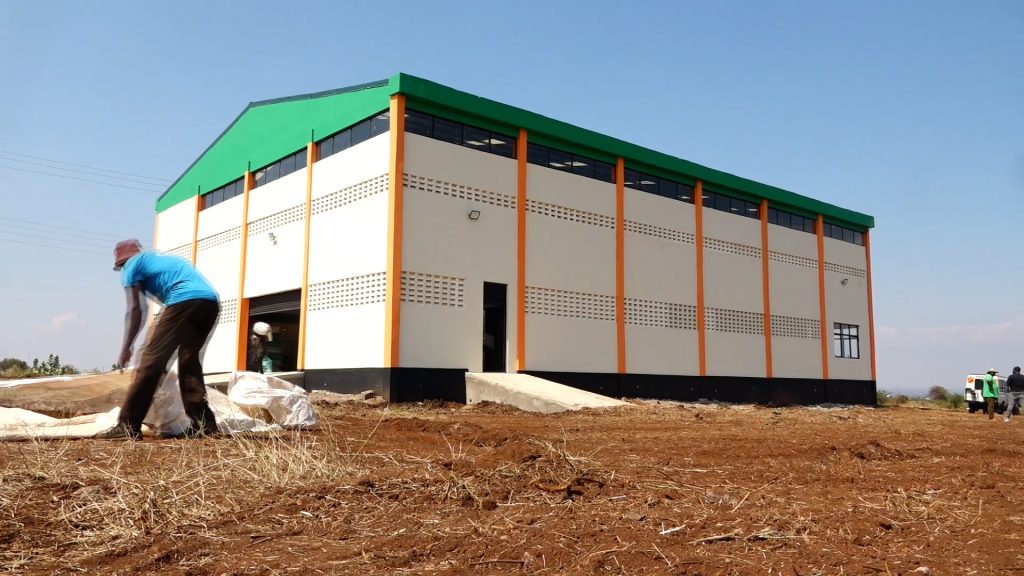
“We still have a good potential of producing enough rice from our available land which will produce large quantity of rice to feed Taita Taveta County and entire nation. However, most of the farms in Taveta are flooded by water which needs some support from our partners national Irrigation Authority to drain our the water so that farmers can access the land for rice farming” said Mwalugha.
Chairperson of the County Assembly Committee on Agriculture, Livestock and Blue Economy, Rose Sariki, said the committee visited the facility to inspect the completed building, assess the installed machinery and witness the milling process firsthand. She said the committee would compile its findings into a report that will be presented before the County Assembly.
“As a committee, we toured the facility together and witnessed the rice milling process firsthand. After this visit, we will return to the County Assembly to prepare and present a comprehensive report on our findings,” she said.
The new rice milling plant is expected to transform rice farming in Taita Taveta by increasing farmers’ earnings, creating employment opportunities across the value chain and supporting the county’s drive towards industrialization.
