

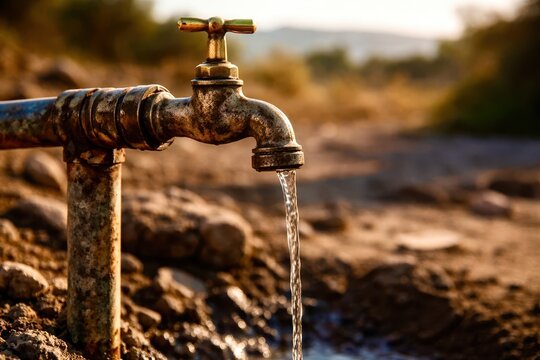

For decades, families in Riata village in Taveta Sub- County have measured time not by the clock, but by the long walks required to fetch water.
This week, that routine changed after the County Government of Taita Taveta and development agency World Vision commissioned a Ksh21 million solar-powered water project expected to supply clean water to more than 1,000 households and over 500 pupils, adding another piece to the county’s effort to tackle one of its biggest development challenges.
The Riata Kubwa Water Project comes at a time when access to safe water remains a major concern across parts of Taita Taveta despite the county hosting key water sources that supply parts of the Coast region.
Official figures indicate that less than half of the county’s population has reliable access to safe drinking water, forcing many communities to rely on seasonal rivers, shallow wells and expensive water vendors.
The newly commissioned project comprises a borehole, solar-powered pumping system, a 100,000-litre masonry storage tank, four community water points and a six-kilometer distribution pipeline. The county government also financed borehole drilling and the construction of two water kiosks, while World Vision supported the remaining infrastructure.
Governor Andrew Mwadime said the investment was designed to reduce the burden borne by women and children, who spend hours each day searching for water.
“Today we are delivering a project that will significantly reduce the distance residents travel in search of water. Children will spend more time in school instead of looking for water, while families will enjoy improved health and livelihoods,” the governor said during the commissioning ceremony at Riata Primary School.
The project also reflects a growing shift towards climate-resilient water systems in the arid county, where prolonged dry spells linked to climate change continue to strain existing water sources. Solar-powered pumping is expected to lower operational costs while ensuring a more reliable supply.
Environmental conservation advocate Peninah Nzomo said reliable access to clean water would improve sanitation and reduce livestock losses that have become common during prolonged dry periods.
“We used to spend money and valuable time looking for water. That time can now be invested in productive activities, and our animals will have a better chance of surviving during the dry season,” she said.
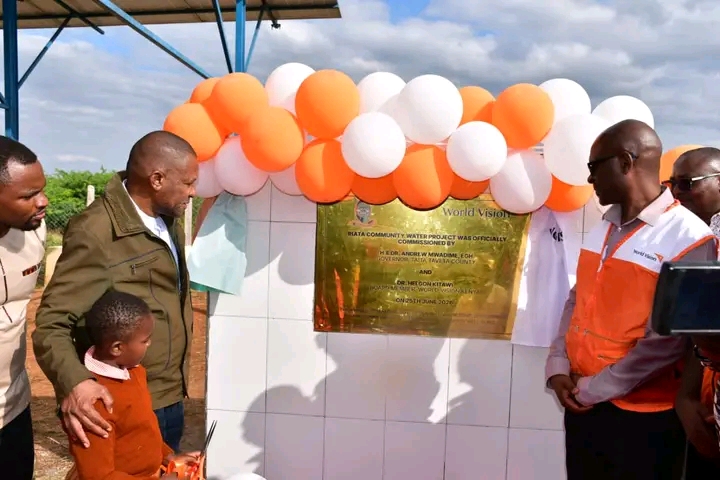
At Riata Primary School, learners are also beginning to experience the benefits. Grade Nine pupil Alex Mwendwa said the school no longer depends on learners carrying water from home for cooking and sanitation.
“School hygiene has improved and we are now able to maintain a kitchen garden because water is available. Before, every learner had to bring water to school,” he said.
The Riata investment adds to a series of water projects being rolled out across Taita Taveta as authorities seek to close a widening supply gap. Recently, the county and the National Drought Management Authority commissioned a Ksh51 million water project serving drought-prone communities around Mbololo.
The county has also announced plans to establish rural water companies to improve the management and maintenance of community water schemes, addressing a longstanding challenge where completed projects deteriorate because of weak governance structures.
County Executive Committee Member for Water Granton Mwandawiro said institutional reforms would complement investments in infrastructure.
“We are putting in place policies that will strengthen rural water management and improve service delivery so that communities continue benefiting from these investments,” he said.
World Vision board member Dr Helgon Kitawi said the organization would continue partnering with the county to improve access to safe water, arguing that reliable water supply directly influences education, public health and local economic development.
The Riata project also comes as water security remains under national scrutiny. Recent reports show the wider Coast region continues to face a significant water deficit despite ongoing investments in dams, pipelines and boreholes, with demand far exceeding available supply.
