

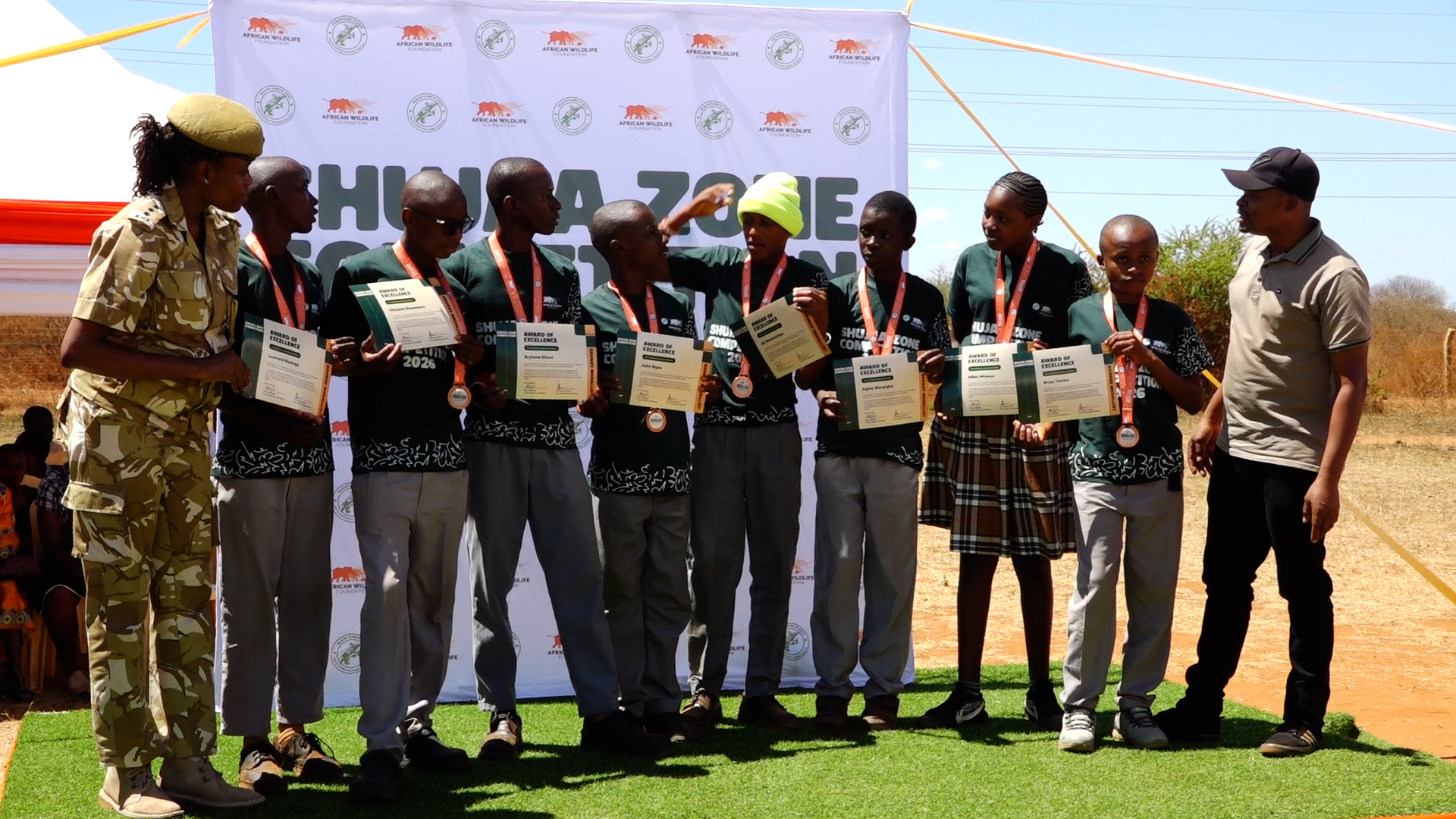

A total of 250 Young conservationists from schools across the Tsavo landscape have been recognized for their efforts to protect wildlife, conserve the environment and find creative solutions to local environmental challenges.
The young conservationists were celebrated during the Shujaa Zone competition awards ceremony held at Ngwata Comprehensive School in Kambu Sub-County, Kibwezi East Constituency, Makueni County.

Speaking during the event, Wildlife Clubs of Kenya Chief Executive Officer Dr. Margaret Otieno said involving young people in conservation was critical to securing the future of Kenya’s wildlife and biodiversity.
Margaret, who also serves as the global chair of the International Union for Conservation of Nature Commission on Education and Communication, said Kenya’s large youth population provides a critical opportunity to achieve lasting conservation results.
She said the project has focused on equipping young people with conservation knowledge and practical skills through creativity and hands-on activities, enabling them to protect wildlife as well as the wider biodiversity within their landscapes.
Margaret noted that environmental degradation, climate change and human-wildlife conflict continue to pose significant challenges, making it necessary for communities living alongside protected areas to take an active role in conservation alongside government agencies.
“Currently there’s a lot of global challenges in terms of environmental degradation and human-wildlife conflicts and because of that, it’s really important that action is taken not just by Kenya Wildlife Services but also by communities that live adjacent to these protected areas. In recent years we have seen a lot of cases of human-wildlife conflict and it’s not like these cases are going down and also the effect of climate change can be felt everywhere including today,” she noted.
Furthermore, Margaret said young people involved in the program were already contributing to conservation by creating habitats for wildlife and planting trees in their schools and communities.
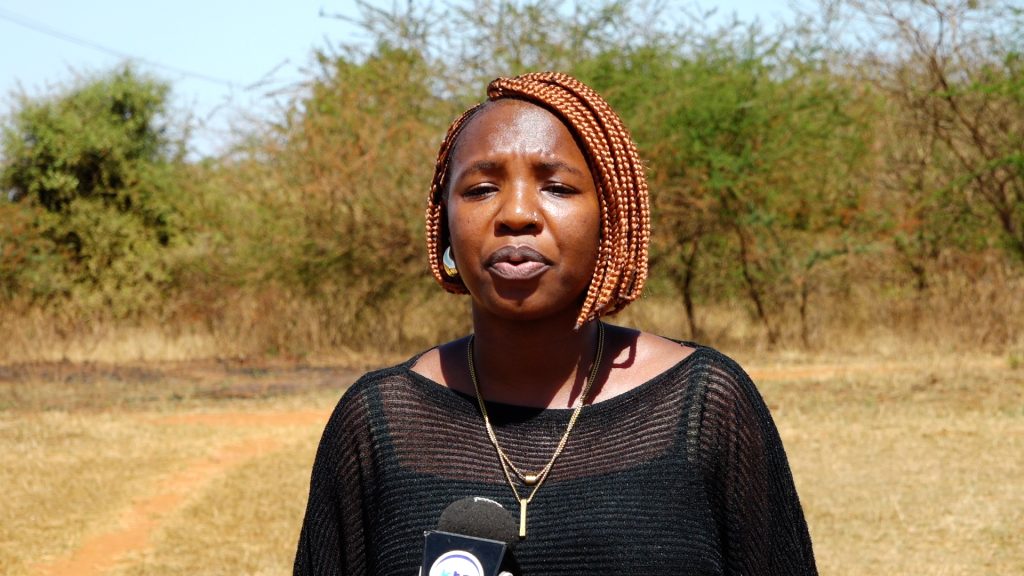
“If the young people are involved like the ones in this landscape have been involved, then you find they are changing landscapes and they are creating habitats for wildlife and that’s why today we are able to see trees in this school and also in other areas.” Margaret said.
She added that the celebration was significant as it brought together the recognition of young conservationists and the wider message of empowering youth to take responsibility for protecting nature for future generations.
“The future of wildlife conservation cannot be separated from the future of this conservationist that we are empowering today. We have to involve the young people in conservation for there to be a future full of the wildlife that we all enjoy seeing,” Margaret said.
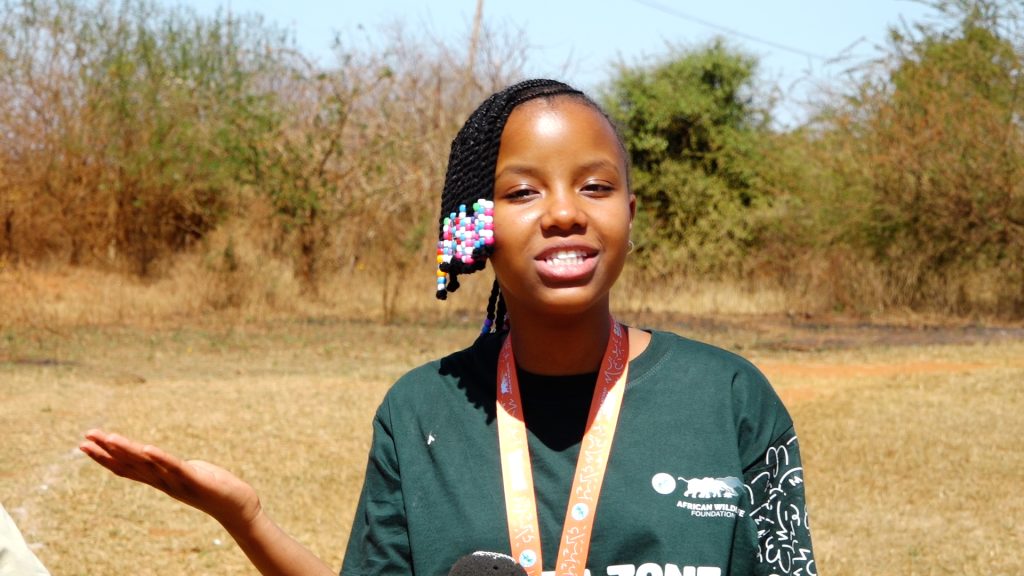
At Ngwata Comprehensive School, teacher and wildlife club patron Patrick Kiminza said the school was using its wildlife club to help learners understand that environmental conservation goes beyond tree planting.
The school operates in an arid and semi-arid area where water shortages, limited vegetation cover and challenging soil conditions make environmental conservation difficult.
Patrick said learners were being exposed to various conservation practices, including protecting naturally growing trees, controlling soil erosion through terracing, contour farming and gabions, as well as beekeeping.
“There are various ways of conserving environment. Taking care of what is existing the naturally, the growing trees we do the pruning of them to ensure there is that high growth of them. There is also the soil erosion. We take care of the soil erosion by maybe contour farming, building of the gabions, digging of the terraces within our farms to control the soil erosion. We also do the conservation through the beekeeping, apiculture,” he said.
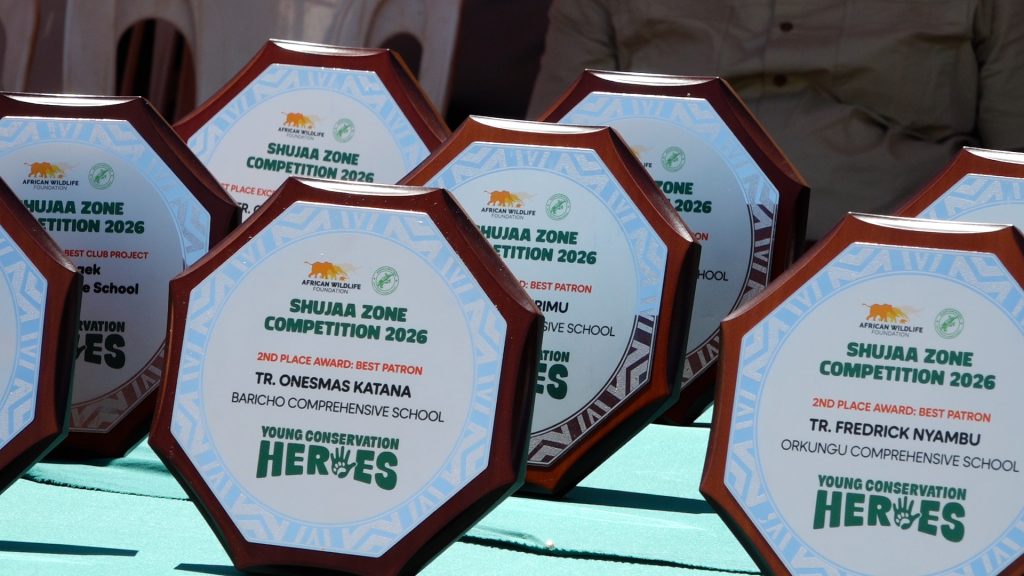
The school also promotes the planting of fruit trees, particularly mangoes, which provide both environmental and economic benefits to communities.
Patrick said learners were being placed at the forefront of conservation activities so that they could understand how to protect the environment in which they live.
African Wildlife Foundation Tsavo Landscape Manager Wanyika Wangio said the Shujaa Zone competition was designed to recognize and encourage young conservation champions.
Wangio said AWF’s conservation education program works mainly with primary schools, with the aim of nurturing children into advocates and champions for nature.
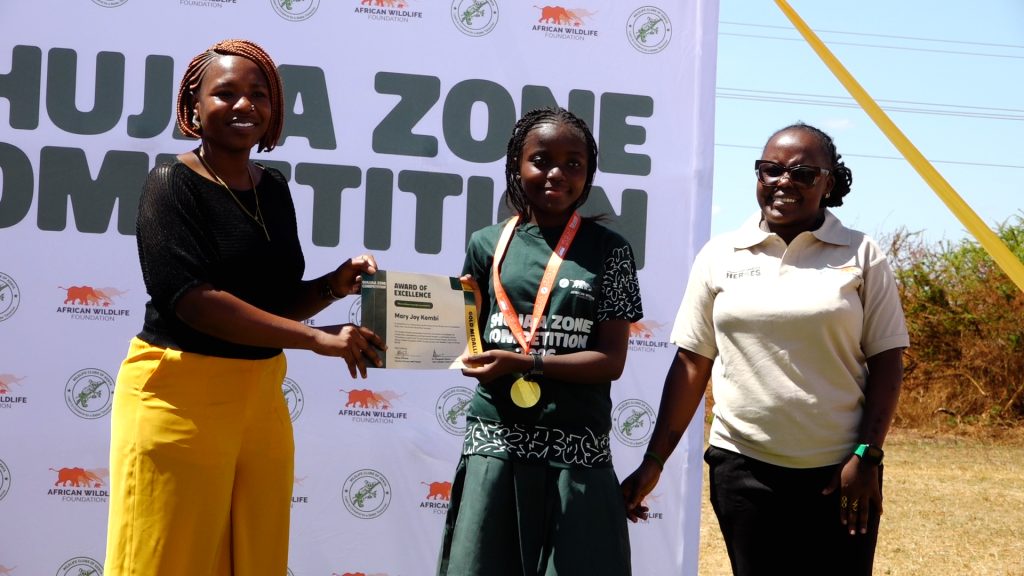
“Our main target is to target is to work with schools, the young kids especially in primary schools and for us we are looking at them as people who are going to be advocates as people who are going to be champions for nature conservation,” she said.
Wangio said the organization believes children are both current and future leaders of conservation and that conservation education should benefit society regardless of the careers young people eventually pursue.
According to Wangio, a child does not necessarily have to become a professional conservationist to contribute to environmental protection. Whether they pursue medicine, finance, banking or another profession, he said, they can still become champions for conservation.
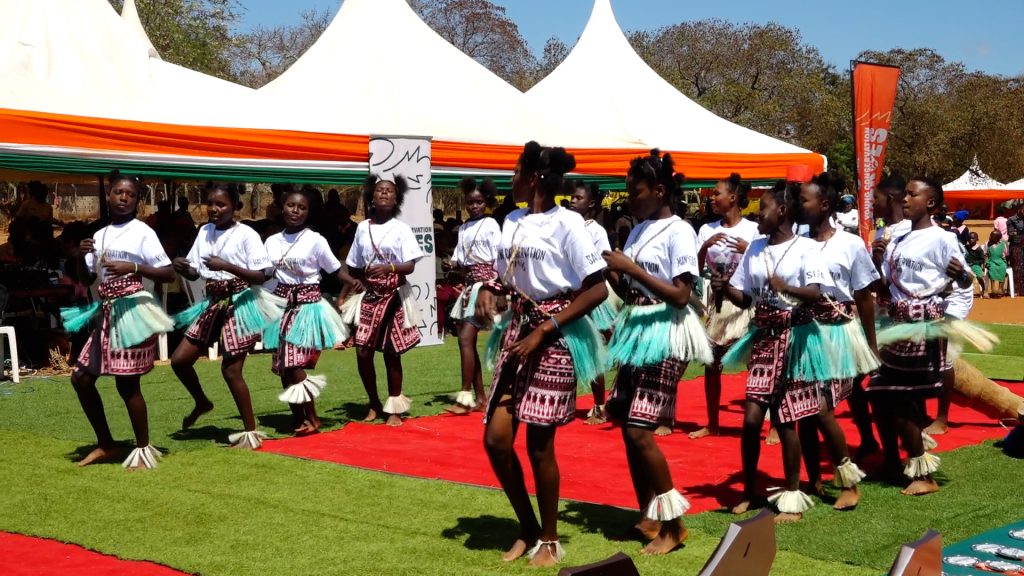
“We are not expecting our children to go be conservationists like us but in whatever field they are going to pursue, be it medicine, be it things in the finance industry, be it in the banking industry, we believe that whatever field they will be in they will be champions of conservation and that is a win-win for us,” she noted.
The Shujaa Zone competition is implemented through a partnership involving the African Wildlife Foundation, Wildlife Clubs of Kenya, Kenya Wildlife Service and the Ministry of Education.
Wangio said partnerships were important because organizations such as AWF could not reach every school on their own. Through collaboration with KWS, Wildlife Clubs of Kenya, schools, teachers, parents and communities, conservation education can reach more young people.
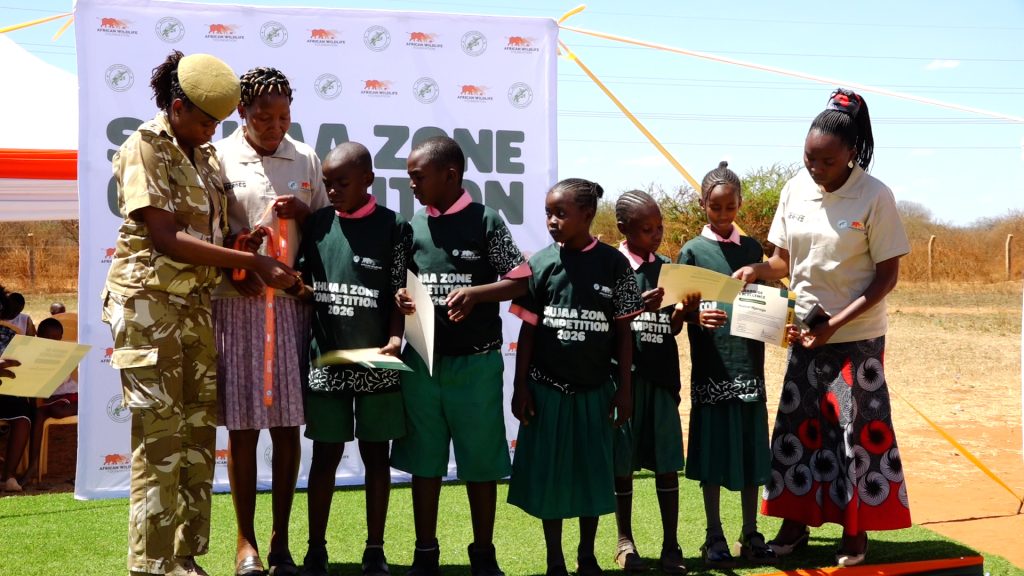
She emphasized that conservation must also begin at home, saying efforts made in schools could be undermined if similar practices were not encouraged within families and communities.
The program’s young participants demonstrated how conservation education is helping them identify and address environmental challenges within their communities.
Aisha Musa, a pupil from Mata Junior School in Taveta Sub-County, wrote an essay on how communities can coexist peacefully with wildlife. Living near Tsavo West, Aisha said she regularly encounters elephants, lions, zebras and giraffes.
She said wildlife sometimes enters communities in search of food and water, particularly when forests are degraded, creating situations that can result in conflict between people and animals.
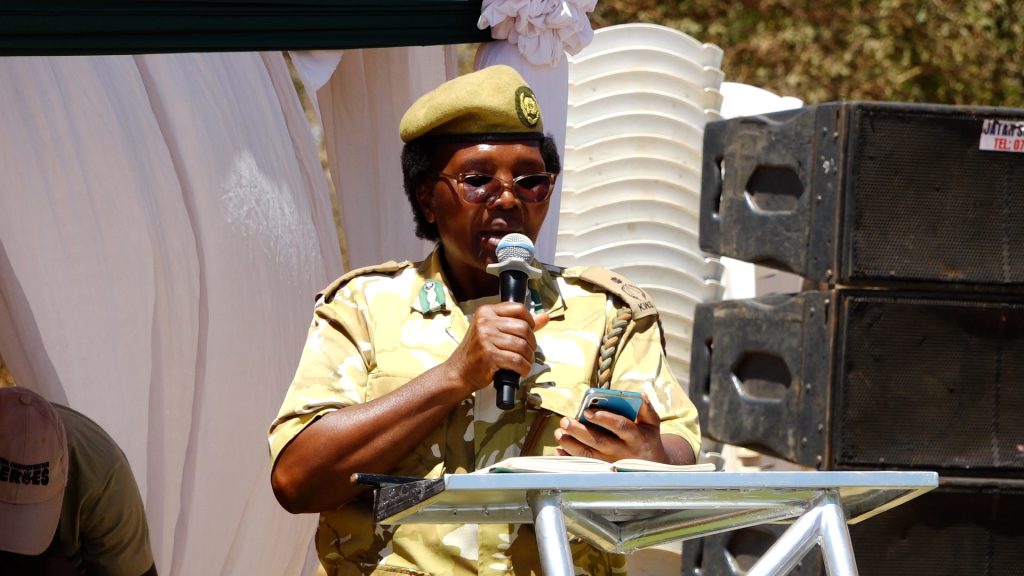
“So sometimes when these animals wander into our community trying to find food because some people go and cut trees, then they don’t have enough water and food. They come to our community to find some food. Some people try to harm them and to make them food and it’s not great. I don’t like that one,” Aisha said.
Aisha said she used her essay to educate communities on the importance of wildlife, highlighting tourism as one of the major benefits of protecting animals.
“I wrote this essay to inspire people, educate them to know why wild animals are very special to our community, how they help us and their benefits. One of the benefits is like tourism. Tourism, attracts tourists both local and all over the world,” she said.
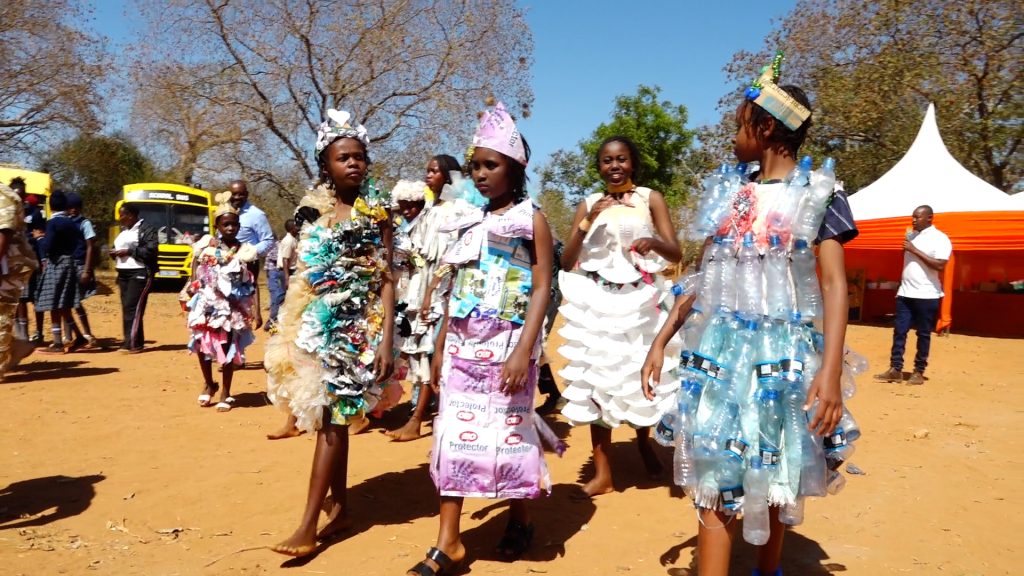
Alex Ndambo from Tausa Comprehensive School was among the conservation heroes recognized said pupils at his area identified litters around shops and the school as a problem and came up with a creative way of reusing waste materials by making outfits for modelling and fashion shows.
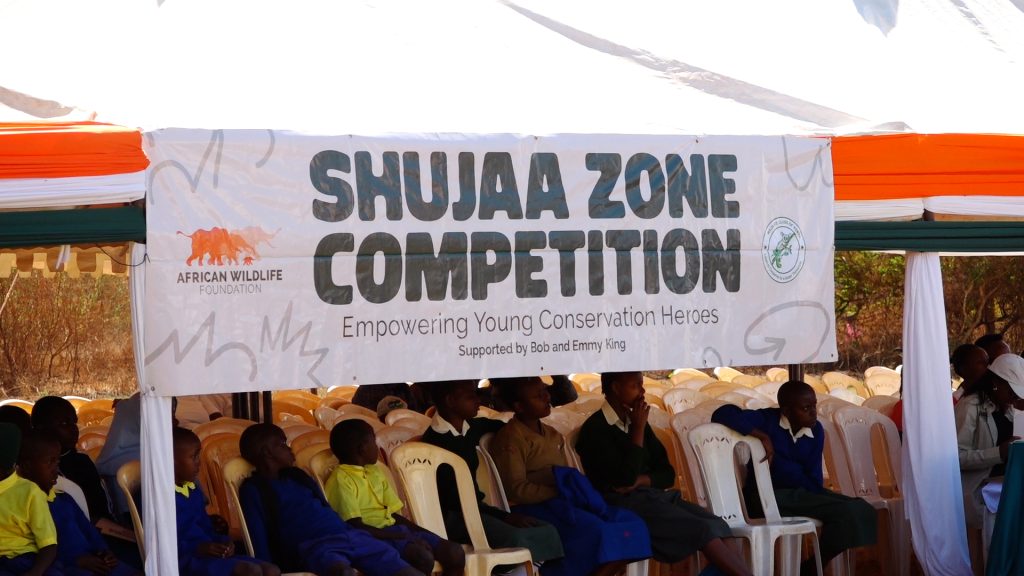
“In our school, we identified a problem where papers and other waste were being littered around the shops and within the school compound. As a result, we sat down with the teachers and other students and decided to use the waste materials to make clothes or outfits that could be used for modelling and fashion shows. We were successful in what we did, and we are very proud of our achievement,” he said.
Alex explained how poorly disposed polythene bags posed a danger to livestock, particularly goats that could ingest the plastics. He also noted that indiscriminate dumping created unpleasant smells in their village.
“In our village, we had a problem with polythene bags that were being carelessly disposed of everywhere. Animals such as goats would come across the bags and eat them, which was very dangerous to the animals. The polythene bags could affect an animal’s breathing system, especially if one became lodged around the throat or in the trachea, making it difficult for air to pass through. There was also a very bad smell in the village, so unpleasant that visitors would have to wear masks. After we addressed the problem, the bad smell was eliminated and the animals were no longer at risk,” he said.
Alex proposed that households create designated waste disposal pits and properly dispose of waste instead of dumping it in open spaces. He also called for continued environmental awareness programs in schools and communities, including during school holidays, to encourage people to keep their surroundings clean and protect natural resources.
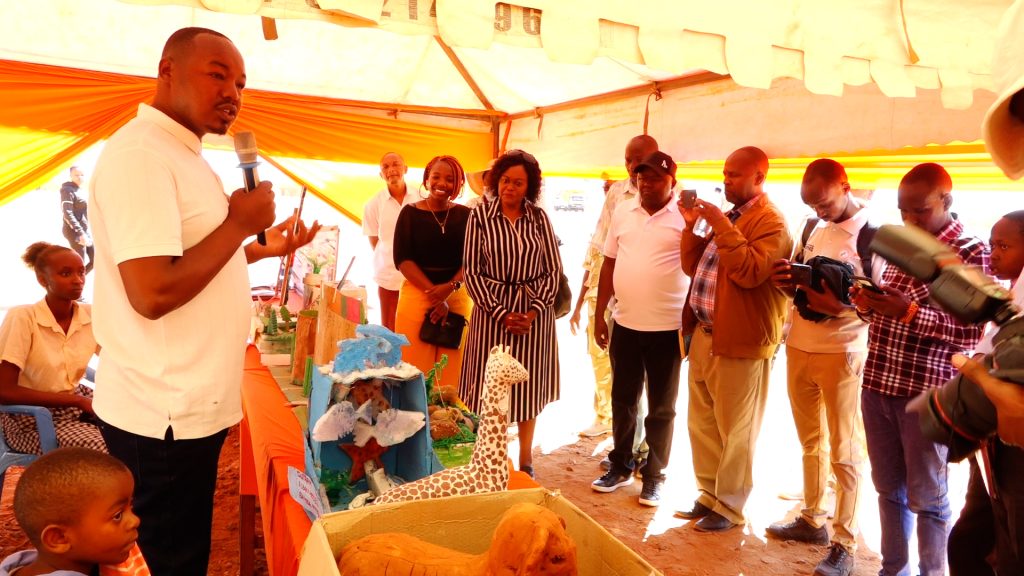
“Every citizen or every household should dig a waste-disposal pit outside their home where they can put used packaging materials and other waste and burn them safely. This will prevent animals from eating the waste and will also eliminate the bad smell. We should also have programs during school holidays where students are brought together, either in halls or at schools, to raise awareness about the conservation of natural resources and how to keep the environment clean,” he said.
The conservation initiative demonstrates the growing role of young people and communities in addressing environmental challenges, while strengthening efforts to protect wildlife and biodiversity across the Tsavo landscape.
The chief guest Madam Zainabu Salim applauded the young conservation heroes for their creativity, innovation and dedication towards protecting the environment and wildlife. She also applauded the organizer’s for choosing children of their age to participate in the efforts of conservation.
Zainabu added by challenging the pupils to take advantage to the current effects of climate change in the country and globally as a job opportunity for self-employment as young conservationists.
“The ongoing problems facing the environment should be your opportunity as young people with passion of conservation by building ideas which will employ you while solving the existing problems. You need not to give up but continue working hard while in your schools and within the village as true conservation heroes and that is why we have recognized you in this Shujaa Zone Competitions” said Zainabu, Assistant Director and Community wildlife service warned Tsavo Conservation Area.
Zainabu said conservation is not a KWS responsibility but a collective action that everybody should participate in saving the biodiversity for current and future generations. She said illegal human activities to the environment are as a result of the ongoing global warming and disasters like floods and drought which are being witnessed in some parts of the region. She emphasized on the need for collective effort in conservation.
